
What Is the History of Christian Medical Missions?
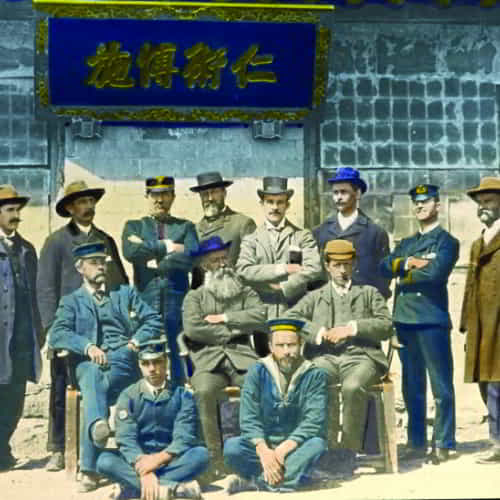
Christian medical missions is probably older than can be documented, but the first that was chronicled was in the 1800s. The history of medical missions reveals a movement born from compassion and necessity. Early efforts combined healing with ministry, creating a model that persists today.
Peter Parker: Opening China Through Medicine
First Western Medical Missionary to China
Medical work opened doors where other approaches faced resistance. Communities welcomed physicians even when suspicion greeted other foreigners, as Peter Parker’s experience demonstrated.
“It began with Peter Parker, an American physician, in 1834,” MedSend tells us. “Parker was the first modern-day full-time medical missionary to China and was one of the very few foreigners to get invited inland. Foreigners were not allowed to mingle with Chinese people.
Parker’s unique position stemmed from his medical credentials. His arrival marked the beginning of organized medical missions, though individual christian missionaries had provided informal healthcare for centuries earlier.
In 1835 Parker opened a hospital in Canton. More than 2000 Chinese patients were treated in the first year alone.
Canton Hospital and Local Training
This overwhelming response revealed desperate need for care. Patients traveled for days to reach his facility.
The Canton hospital became a training ground for Chinese medical assistants, establishing a principle that would shape medical missions for generations. Parker recognized sustainable healthcare required local workers, not perpetual foreign dependence.
The Edinburgh Movement
Formation of Medical Mission Societies
Parker then went to the University of Edinburgh and shared how missionaries could get into China: through healthcare. This started a movement.
Edinburgh became a hotbed of modern global healthcare missions. Groups like Sudan Inland Mission (today’s Serving in Mission) sprang up to use healthcare professionals to access previously unreached areas. The Scottish medical schools proved particularly influential in shaping this new approach to missions.
In 1841, a group of doctors formed the Edinburgh Medical Missionary Society to send medical aid into the world.”[1]
The Edinburgh model emphasized recruiting qualified medical professionals with both clinical skills and ministry calling. This dual requirement created high standards while ensuring workers could deliver competent care alongside compassionate service.
Tropical Medicine Training Programs
Students gained tropical medicine training designed for service in Africa and Asia, preparing them for diseases rarely seen in Europe.[5] These specialized courses addressed unique challenges of practicing medicine far from European hospitals.
The Growth of Medical Mission Work
Early Challenges and Survival
So began a long and evolving way to fulfill God’s desire that we serve the “least of these.” Medical Missions writes of the history, “Consider this: before 1850, there were fewer than fifteen medical missionaries.
The scarcity reflected both dangers involved and limited understanding of tropical medicine. Malaria, cholera, and other diseases killed missionaries faster than they could be replaced, with life expectancy averaging just eight years in parts of Africa.
The average life expectancy for missionaries in Africa in that day was eight years. Oftentimes, medical missionaries started because missionaries were taught basic medical needs.
Those who survived often did so through trial and error. They developed treatments by combining local healing practices with their medical training, creating hybrid approaches that proved more effective than either system alone.
Mission organizations realized all workers needed medical training, not just physicians. Basic healthcare knowledge became essential for survival.
By the 1870s, mission schools began offering formal medical training courses. These programs equipped non-physicians with practical skills.
Around the 1890’s to early 1900’s university campuses began to head overseas as missionaries.”[2]
Campus Mobilization Movement
This campus mobilization transformed recruitment dramatically. Where previous generations had relied on individual calling and sporadic church sponsorship, the Student Volunteer Movement created organized, systematic pathways for students to prepare for and enter medical mission service. Universities became launching pads for global healthcare ministry.
University medical students increasingly chose medical missions as their career path, bringing fresh energy and current medical knowledge to the field. Leading physicians shared field experiences at conferences, with the Student Volunteer Movement establishing medical missions courses in 1894.
These gatherings inspired short term trips that allowed students to experience medical mission work firsthand before committing.
The Establishment of Permanent Healthcare Systems
The development of mission hospitals marked a crucial turning point. Rather than relying solely on traveling physicians, organizations began constructing permanent facilities.
These early facilities faced tremendous challenges. Building materials had to be transported long distances, staff recruited, and financial support secured.[6]
Despite obstacles, hospitals proved their value quickly. Patients no longer had to wait months for traveling physicians. Surgical procedures could be performed in sterile environments.
Hospitals also became training centers that multiplied impact far beyond their walls. By the early 1900s, these facilities were graduating nurses and medical assistants who could extend care into surrounding villages, creating networks of healthcare provision that reached populations who would never travel to the hospital itself.
The hospital model spread across Africa, Asia, and Latin America. By 1925, these facilities numbered in the hundreds, collectively treating millions annually.
The Evolution of Team-Based Medical Care
This growth created new organizational challenges. How could facilities operate efficiently across vast geographic regions? How could limited medical personnel serve maximum populations? The answer emerged through collaboration rather than individual heroism.
The concept of a medical team working together transformed care delivery. Early missions often sent individual physicians who worked alone, but this approach proved inefficient.
Isolation took its toll on solo practitioners. They bore crushing workloads without colleagues for consultation or support.
By the 1920s, coordinated teams became standard practice. A typical medical mission trip now included doctors, nurses, pharmacists, and support staff working together.
Team composition varied by context. Surgical teams focused on procedures like cataract removal, while public health teams emphasized preventive care and disease surveillance.
The team model dramatically improved both efficiency and expanded service capacity across all dimensions of care. More patients received treatment in less time. Specialized skills could be deployed strategically. Teams also provided crucial mutual support in challenging conditions, reducing burnout rates and improving long-term retention of medical personnel.
Transition to Long-Term Sustainable Presence
The shift from temporary visits to long term commitments reshaped effectiveness. Organizations discovered years-long placements produced better health outcomes.
Long-term workers built relationships, understood local health patterns, and implemented sustainable improvements. They learned languages, adapted to cultural practices, and earned trust short-term visitors could not establish.
The transition required different recruitment strategies. Organizations needed professionals willing to commit years to specific locations.
This longer commitment yielded far deeper impact than brief rotations could achieve. Long-term workers could establish comprehensive vaccination programs, develop and train local healthcare providers through sustained mentorship, and address systemic public health issues rather than merely treating acute individual conditions that would recur without systemic change.
The Critical Role of Indigenous Leadership
A pivotal shift occurred when organizations recognized local church communities needed their own trained healthcare providers. Perpetual foreign dependence proved neither practical nor desirable.
Local workers brought irreplaceable advantages. They understood cultural nuances, spoke the language fluently, and maintained permanent presence.
Investment in indigenous healthcare training accelerated. Healthcare facilities expanded education programs, offering nursing diplomas and medical assistant certifications.[7]
By the mid-20th century, the shift toward indigenous leadership had become unavoidable. Foreign workers could not sustain ministry alone. Political changes restricted international access. Local communities desired autonomy rather than paternalistic oversight.
National missionaries emerged as the backbone of sustainable medical work in many regions, combining healthcare training with ministry preparation.[3]
Through intensive three-year training programs, national workers prepare for full-time ministry. Their curriculum covers both medical skills and theological foundations.
National workers navigate cultural and political landscapes that challenge foreign workers. In regions with restricted access, national workers maintain continuous healthcare ministry.
Modern Medical Missions: Continuing the Legacy
Persistent Global Healthcare Gaps
Today, thousands of medical missions, mostly short-term, are sent yearly to places like Africa and South Asia where most of the world’s poor live. The poor in these countries cannot afford health care, and even if they could, they may have to travel long distances to get it.
The scale of need remains staggering. World Health Organization and World Bank data shows nearly half the world’s population lacks access to essential health services.
Despite nearly two centuries of medical mission work, billions still live without basic healthcare. The gap between wealthy and poor nations continues widening. Technology advances rapidly in developed countries while rural communities in Africa and Asia lack even the most basic diagnostic tools or treatments for preventable diseases.
Economic and geographic barriers compound each other. In rural areas of Africa and Asia, the nearest clinic may be hours or days away, making basic healthcare effectively inaccessible.
For almost 100 million people, healthcare expenses push families into extreme poverty annually. Medical costs devastate households surviving on less than $2.15 per day.
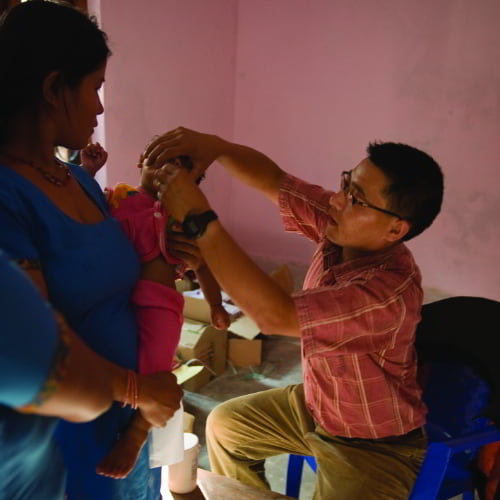
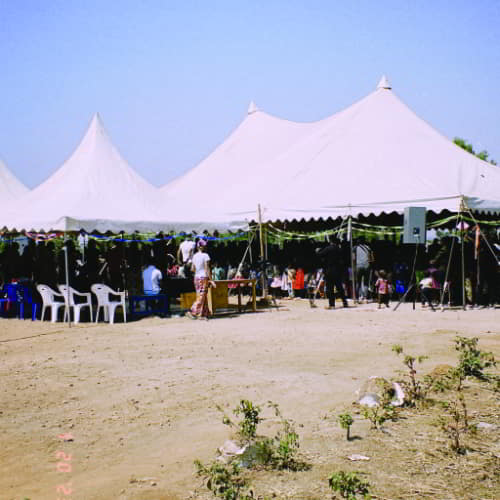
This is one of the reasons why we created our Medical Ministry. By bringing medical camps to these places, we can offer free health care to those in desperate need.
Mobile Medical Camps
Mobile medical camps represent a modern adaptation of early itinerant work. Camps operate for several days in each location, treating hundreds of patients and referring complex cases to regional hospitals.[8]
One small ailment that is easily treatable in the West might become a full-blown medical disaster for someone who cannot visit a doctor.
If that person can no longer work or go to school because of sickness, their ability to stop the spiral of poverty is severely limited if not destroyed.
The economic impact of untreated illness creates poverty traps spanning generations. When breadwinners cannot work due to preventable conditions, children drop out of school.
Respiratory infections, intestinal parasites, and skin conditions represent common ailments camps can treat effectively. Left untreated, these lead to chronic disability and reduced productivity that keeps families impoverished.
Lessons from Two Centuries of Service
The world missionary movement learned crucial lessons over nearly two centuries. Sustainable transformation requires local ownership, cultural sensitivity, and long-term commitment.
Those early pioneers who risked everything to heal the sick established principles that guide contemporary practice. Their willingness to serve in dangerous conditions, commitment to treating all patients, and integration of physical and spiritual care created a model that continues inspiring new generations.
Modern approaches benefit from historical experience, emphasizing partnership with local healthcare systems and capacity building through training programs.
The movement evolved from Western doctors working alone to collaborative teams including local and international professionals.
Building for Tomorrow: Medical Infrastructure in Africa
Rwanda Hospital Facility
Modern medical missions continue establishing comprehensive infrastructure. In Rwanda, a world-class hospital and medical university are being built to serve as training hubs for the continent.[4]
This 300-bed facility, scheduled to open in June 2026, will include 12 to 14 specialist departments ranging from cardiology to neurology. The hospital aims to serve over 500,000 patients in its first two years.
Located just six miles from Kigali, the hospital will be the second major medical facility in a country of 14 million people served by only about 1,500 doctors.
Medical University and Training
The accompanying medical university will welcome 100+ students annually. This creates a sustainable pipeline of African healthcare providers.
Students will gain practical experience through medical camps in underserved areas. Upon graduation, they will establish clinics in their home regions.
The Rwanda project also includes research facilities. These labs will conduct studies on diseases affecting African populations, developing treatments suited to local conditions.
This holistic approach echoes the mission hospital model established in the 1800s but incorporates modern medical education. By combining patient care, professional training, and clinical research, the facility creates multiplying impact.
The project represents how historical principles apply in contemporary contexts. Just as Parker’s Canton hospital trained Chinese medical assistants in 1835, the Rwanda facility will equip African healthcare professionals.
Give today to GFA’s Medical Ministry. GFA workers and volunteers will lovingly bring medical attention, medical advice and much-needed medicine to thousands of people in the areas they serve.
In 2019, nearly 1,300 medical camps were set up by GFA, serving hundreds each and making significant differences in the lives of the precious souls they treated. Won’t you help support this effort?
Learn more about GFA’s Medical Missions programs[1] “The History of Healthcare Missions.” MedSend. Accessed July 16, 2023. https://medsend.org/history-of-healthcare-missions/.
[2] “Medical missions: what it is and the history behind the movement.” Medical Missions. September 11, 2020. https://www.medicalmissions.com/resources/23185/medical-missions.
[3] “Why Support National Missionaries.” GFA World. Accessed March 15, 2026. https://www.gfa.org/sponsor/why-national-missionaries/.
[4] “Rwanda Hospital.” GFA World. Accessed March 15, 2026. https://www.gfa.org/hospital/.
[5] “Tropical Diseases Training for Medical Missionaries.” Wellcome Collection. https://wellcomecollection.org/works/ts6qwphg. Accessed March 16, 2026.
[6] “Infrastructure Challenges in Early Mission Hospitals.” SAGE Journals. https://journals.sagepub.com/doi/10.1177/0091647119892991. Accessed March 16, 2026.
[7] “Training Indigenous Healthcare Workers in Mission Facilities.” PMC. https://www.ncbi.nlm.nih.gov/pmc/articles/PMC3678833/. Accessed March 16, 2026.
[8] “Medical Camp Referral Networks.” PMC. https://www.ncbi.nlm.nih.gov/pmc/articles/PMC6162094/. Accessed March 16, 2026.