
What Does a Medical Missions Outreach Do?
A medical missions outreach takes affordable or free health care to parts of the world that either cannot afford health services or do not have any near them. The need is great as nearly half of the world’s population does not have access to proper medical care.[1]
The Scale of the Healthcare Access Crisis
Across Africa and Asia, where most of the world’s poor live, healthcare disparities remain stark. Child mortality rates in low-income countries substantially exceed those in wealthy nations, according to Our World in Data. These global health challenges affect millions. Healthcare spending reveals the depth of these inequities. In the Central African Republic, per capita health expenditure fell below 100 international dollars in 2019, while the United States exceeded 10,000 international dollars — a gap that translates to profound differences in access to care.
According to Medical Benevolence Foundation, “While estimates vary, there are easily over 100,000 such medical ministries in the world. In fact, in some countries, these ministries provide up to 60% of all medical care, and often offer the only medical services in poor rural communities.”[2]
The need is recognized, and there is an increase in short-term service in this way. “More than a thousand U.S. mission organizations and ministries that we are aware of send people on short-term mission trips of one kind of another, in addition to the tens of thousands of churches and more than a thousand Christian colleges, seminaries, and high schools that sponsor trips,” writes Mission Guide.[3]
These numbers reveal both opportunity and urgency. GFA World recognizes that meaningful change requires sustained commitment, not isolated interventions.
The Quality Crisis
However, access alone does not guarantee good outcomes. In low and middle-income countries, 5.7 million people die yearly from poor quality healthcare — exceeding the 2.9 million who die from lack of access entirely.
Quality matters as much as availability. Deficiencies do not result from lack of professional compassion or necessarily a lack of resources, but from gaps in knowledge, inappropriate applications of available technology, or the inability of organizations to change.
GFA World has always been aware of the need in the places it serves, like South Asia and Sub-Saharan Africa, where the poorest of the poor live. Conflicts, natural disasters, and economic upheaval compound these challenges — multiplying barriers to care for the most vulnerable.
Refugees and Displaced Populations
The World Health Organization says this about health care of refugees: “Whether displaced by conflict, political danger, or natural disasters, refugees face barriers obtaining healthcare when they most need it, either on their journey or upon their arrival in host countries. This situation arises from factors such as limited entitlements to care, language barriers, and administrative and financial obstacles.” There were some 100 million refugees in 2022 alone.[4]
Displacement amplifies vulnerability in ways that ripple through entire regions. Between 2012 and 2013 alone, close to 1,800 incidents of organized violence were reported, particularly affecting the Middle East, Africa and Asia. Trained healthcare workers flee violence, creating critical staffing gaps that compound access barriers. The impact on healthcare systems proves both profound and long term.
GFA World’s Medical Ministry Response
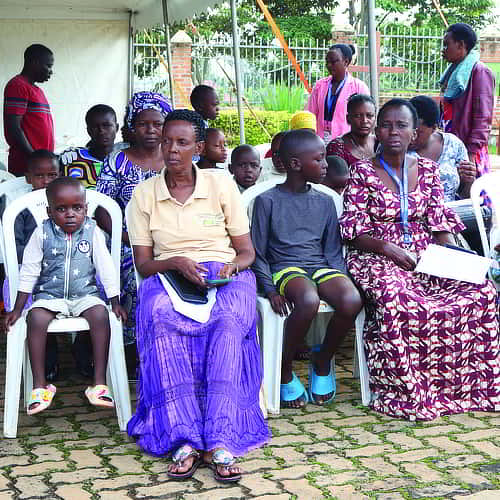
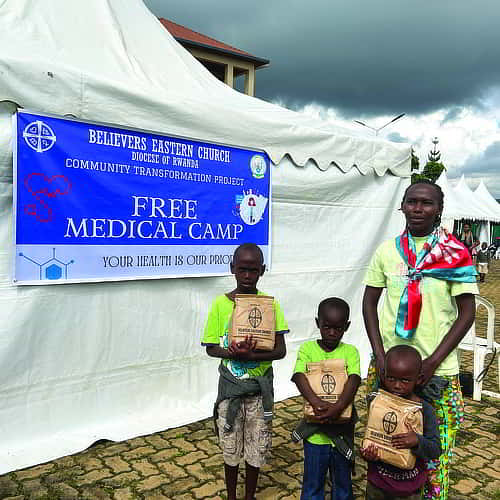
This is why GFA’s Medical Ministry is working hard to provide more medical camps in the regions its serves. Through GFA workers and volunteers, they set up camps that can give service to those who cannot afford it. All care is free at GFA medical camps. They can treat common ailments and give advice on seeking treatment for more complex matters. Hundreds of people usually line up to get the medicine they need but could never pay for on their meager income.
The Role of Medical Professionals and Volunteers
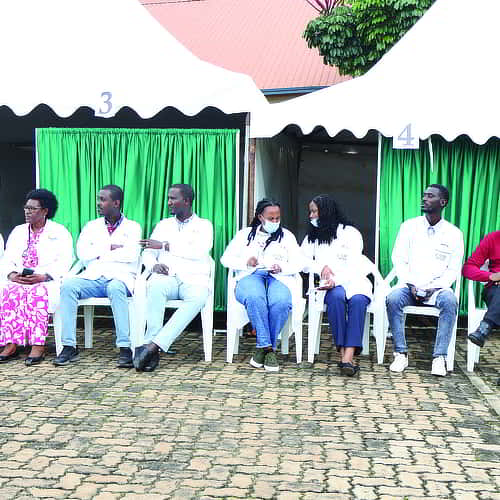
Trained doctors and nurses form the backbone of effective medical care in underserved regions. More than 3,000 volunteers join medical programs globally each year, per VolunteerHQ data, working alongside qualified professionals to serve people in developing countries.
Many medical volunteers come from diverse backgrounds. Pre-medical students, nursing students, and fully qualified practitioners all contribute. Roles vary based on experience and qualifications, with volunteers providing administrative support, shadowing licensed practitioners, or assisting directly with patient care.
The value extends beyond technical skills. Volunteers bring compassion and fresh perspectives, multiplying the impact of medical teams while building bridges across cultures.
These outreach programs create lasting impact beyond immediate interventions. Medical professionals witness firsthand how doctors in developing countries make diagnoses and decide on treatment with limited resources, per program observations. The experience builds understanding and relationships that extend far beyond single visits.
GFA World’s approach integrates both local churches and community leaders into healthcare delivery. National missionaries often serve alongside medical teams, helping bridge cultural and language barriers. These workers were born and raised in the countries where they serve, giving them deep understanding of local needs and customs.
Medical Camps in Action
GFA’s medical camps address common ailments that, if left untreated, can become life-threatening. Fever, eye disease, diarrhea, colds, coughs, headaches, stomach problems and anemia are among the most common conditions these camps treat. In Western countries, we can easily visit a doctor for these conditions.
Many people around the world simply endure and suffer. WHO estimates that geographic isolation and financial barriers prevent millions from accessing even basic care. GFA’s medical camps meet people where they are — removing both financial and geographic barriers. For many, these camps provide their first encounter with professional medical care.
Health Education and Preventive Care
Beyond treating illness, effective medical missions emphasize health education. Programs develop curricula and deliver tailored sessions based on identified community needs. Topics include maternal health, nutrition, and fundamental hygiene practices.
This educational component helps communities prevent diseases before they require treatment. GFA’s health promotion efforts address not only lack of food but poor food choices, helping families make better use of available resources. Noncommunicable diseases like diabetes and heart disease now affect developing countries at alarming rates, per WHO data.
Strengthening Healthcare Systems for Lasting Impact
Effective medical missions work toward strengthened local capacity. Health systems strengthening focuses on building sustainable infrastructure that continues serving communities long after visiting teams depart.
Quality of care drives improved health outcomes more than access alone. The World Health Organization recognized quality as a key element in its framework for health system strengthening in resource-poor countries.
Evidence from projects in Peru and Russia shows that healthcare improvements can be managed successfully with limited resources. The key lessons include keeping targets simple and making full use of teams.
GFA World’s approach builds local capacity rather than imposing external solutions. The goal is transformation that outlasts any single intervention.
GFA World’s Long-Term Vision in Africa
GFA World is investing in sustainable healthcare infrastructure through a world-class hospital and medical university being built in Kigali, Rwanda. This facility will serve as a base for training healthcare professionals and advancing research across the continent.
The hospital will have 300 beds and state-of-the-art equipment. It will include 12 to 14 specialist departments, with estimates suggesting over 500,000 outpatients served in the first two years alone. The facility is situated just six miles from Kigali, where nearly 900,000 people live.
Rwanda has only about 1,500 doctors serving more than 14 million people. This hospital will be the second major facility addressing this critical shortage.
The vision extends beyond treating illness to preventing it. By training professionals locally, the facility will help Africa develop its own healthcare solutions.
The accompanying medical university will welcome 100-plus students in medicine and allied sciences each year. This creates a steady flow of new professionals equipped to serve underserved areas. Students will gain practical experience through medical camps and field training.
This model recognizes that the tool of medicine works best when paired with sustainable infrastructure and locally trained professionals. Rather than creating dependence on external teams, it builds capacity from within, ensuring communities can maintain and expand healthcare access independently.
The Critical Need for Continued Support
Support GFA Medical Ministry today and give the gift of health to a person in need of care, and who may never have been to a doctor even once. They cannot, as we do, pick up the phone and make an appointment or go to one of the clinics on every other corner to get immediate care. Your financial gift can be matched by your prayers for the workers and supplies desperately needed worldwide.
Every contribution helps expand the reach of medical camps, train more workers, and supply essential medicines and equipment. Through God’s grace, these efforts bring hope and healing to communities that would otherwise go without.
Learn more about GFA’s Medical Missions programs[1] “Who We Are.” MBF. Accessed July 16, 2023. https://mbf.org/who-we-are/.
[2] Ibid.
[3] “Research and Statistics.” Accessed July 16, 2023. https://missionguide.global/articles/mission-trip-research.
[4] “How health services can welcome refugees.” World Health Organization. June 20, 2023. https://who.foundation/latest-updates/how-health-services-can-welcome-refugees/.