

Making Disciples of All Nations

GFA Missionaries: Making Disciples of All Nations

Making disciples of all nations was the point of Jesus’s last command before He ascended into heaven. Nations look different today than they did when Jesus walked the Earth, but His command remains. In order to reach as many people as possible, Christians now ask the question: Who are the unengaged people groups?

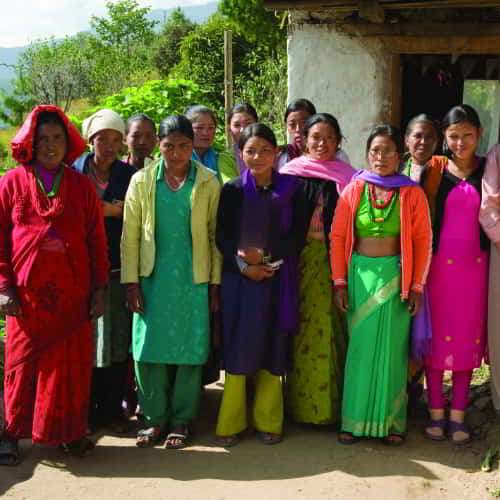
Before His ascension, Jesus delivered what scholars call the Great Commission in Matthew 28:18-20, declaring all authority had been given to Him and commanding His followers to go and make disciples of all nations baptizing them in the name of the Father and of the Son and of the Holy Spirit. The original Greek word for “nations” (ethnē) refers not to political states but to distinct people groups defined by language, culture, and ethnicity. This understanding transforms how believers approach the call to spread the Good News, recognizing that within any geographic country exist multiple ethnolinguistic communities requiring culturally sensitive ministry.

Instead of focusing on a political or geographical nation or state, Christians now recognize that within any given country there many be several people groups. What are people groups? The evangelical organization People Groups defines them as, “an ethnolinguistic group with a common self-identity that is shared by the various members. There are two parts to that word: ethno and linguistic. Language is a primary and dominant identifying factor of a people group. But there are other factors that determine or are associated with ethnicity.”[1]

The Biblical Pattern for Reaching All Peoples

The geographic pattern Jesus established in Acts 1:8 provides the blueprint for this global expansion: His disciples would be witnesses in Jerusalem and in all Judea and Samaria, and to the ends of the earth. This was not a sequential command requiring completion of one region before moving to another, but rather a description of how the gospel would spread through the power of the Holy Spirit. The early church demonstrated this simultaneous expansion, as persecution after Stephen’s death scattered believers who proclaimed Christ Jesus wherever they went, while the apostles remained in Jerusalem. Through God’s grace, this same Spirit empowers missionaries today to carry the message across cultural and geographic boundaries.

Likewise, we need to ask, “What are frontier groups?” This is even more narrow. The Joshua Project defines a frontier group as “an Unengaged People Group (UPG), with virtually no followers of Jesus and no known movements to Jesus, still needing pioneer cross-cultural workers.”[2]

There are an estimated 4,848 frontier people groups, with a total population of 2,007,922,000.[3] According to East-West, “of the approximately 8 billion people on planet Earth, about 3.2 billion are considered [unengaged] or least reached. More than 7,000 people groups are classified as [unengaged]. That’s more than 40% of the total population.”[4]

The sheer scale of these numbers can feel overwhelming, yet they represent not statistics but souls—individuals created in God’s image, families longing for hope, communities waiting to hear that they are loved beyond measure. Each unreached people group carries its own rich cultural heritage, its own stories and struggles, its own yearning for meaning and belonging. God sees every person within these billions, knows every language spoken, understands every cultural nuance. His heart for the nations burns with a love that transcends all boundaries, and He invites His people to share in that passion for reaching the unreached.

Making Disciples, Not Just Converts

Yet the Great Commission calls believers to more than initial decisions for Christ Jesus. Colossians 1:28-29 reveals the apostle Paul’s ministry goal: proclaiming Him, teaching everyone with all wisdom, that believers may be presented mature in Christ. This distinction matters profoundly—converts may know about Jesus, while disciples follow Him with transformed lives, learning to observe His teachings through intentional spiritual formation. Making disciples encompasses the full journey from first hearing the gospel to becoming spiritually reproductive followers who can, in turn, disciple others.

There are 683 people groups in 11 countries in Southeast Asia with little to no gospel witness. Africa’s massive continent is host to 460 groups that have not been reached.[5] These alone are two massive mission fields needing workers to bring the Good News of Jesus Christ and serve the people with love and compassion. This must be done with intentionality, grace, understanding and sensitivity. The language and cultural barriers alone are enough to stop the spread of the Good News. Yet, Jesus would not have left this command for us if there were no way to fulfill it.
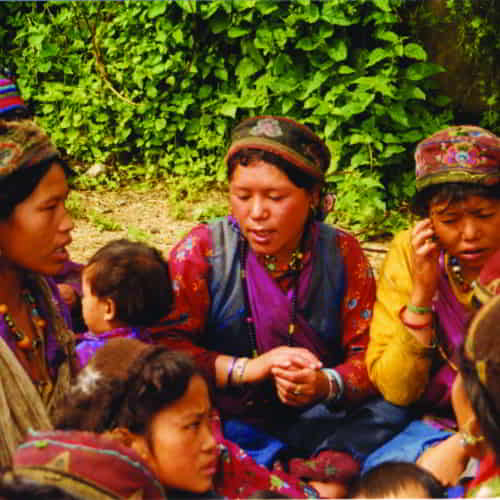
The very fact that Jesus commanded the impossible proves His commitment to making it possible. He does not ask His followers to accomplish what He will not empower them to achieve. Throughout history, believers have crossed seemingly insurmountable barriers—learning languages thought unwritable, reaching communities deemed unreachable, seeing transformations declared impossible. Time and again, God’s grace has proven sufficient for the task, His strength perfected in human weakness, His Spirit opening doors no human effort could unlock.

The command to make disciples includes a crucial component often overlooked: teaching them to observe all that Jesus commanded. This phrase, found in Matthew 28:20, emphasizes active obedience rather than passive knowledge accumulation. Observation in this biblical context means putting teachings into practice, living out the faith through daily choices, and growing in Christlikeness. Discipleship training equips believers not merely with information but with transformation, guiding them toward spiritual maturity that bears fruit in love, service, and faithful witness.

God is at work bringing people from every tribe and tongue into His family, fulfilling the vision Jesus proclaimed. Some believers hear His call to cross oceans and learn new languages, while others support these efforts through prayer and provision. Both roles are essential to the body of Christ functioning as He designed. The question facing each follower is not whether the Great Commission applies, but rather how each person will participate in this worldwide movement of making disciples among all peoples.

GFA’s National Missionary Model

GFA World is committed to serving the least of these in impoverished places in the world and bringing the Good News of Jesus Christ to the far corners of the world, to those who would not hear about Jesus without missionaries being the hands and feet of Jesus. Our national missionary program works to train, equip and send indigenous people to serve those in their own country. This immediately eliminates language and culture barriers.
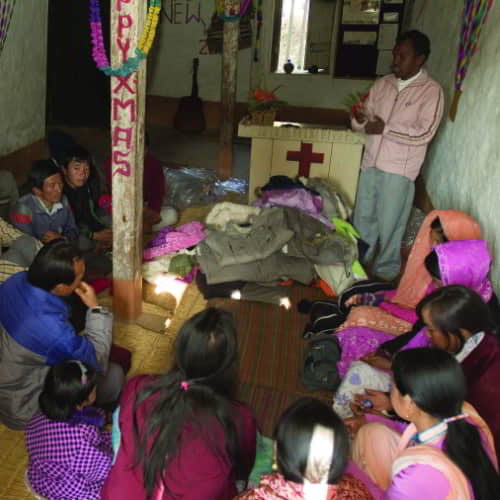
This indigenous approach honors both the Great Commission’s global scope and the practical wisdom of cultural proximity. A missionary who grew up speaking the same dialect, eating the same foods, and understanding the same social customs can build trust and relationships far more naturally than an outsider. They know which illustrations will resonate, which questions will arise, which obstacles their neighbors face in considering new ideas. More importantly, they can remain for decades in these communities, raising families and establishing deep roots—not as temporary visitors but as permanent neighbors who demonstrate Christ’s love through lifelong commitment.

The Trinitarian baptism formula in Matthew 28:19 carries deep theological significance, as new believers publicly declare their entrance into covenant relationship with God the Father, through the redemptive work of the Son, and by the indwelling of the Holy Spirit. Baptism marks not an endpoint but a beginning—the visible sign of invisible grace that launches a lifelong journey of discipleship. National missionaries understand this sacred transition, guiding new believers through both the moment of commitment and the ongoing process of spiritual growth that follows.

From Blindness to Missionary Service: Sundar’s Story

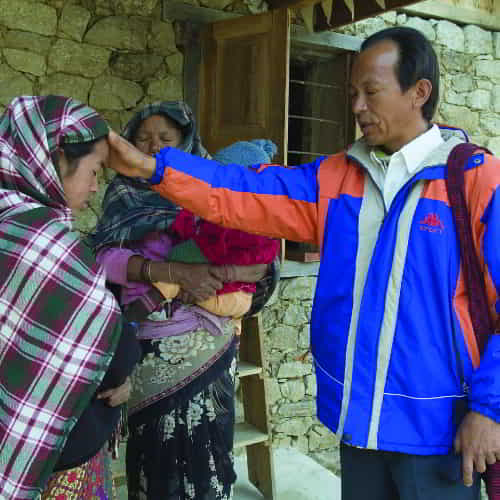
One such missionary has a long and miraculous story, led to faith through the loving service of another GFA pastor. Sundar was born blind into a poor family, his father battling his own physical limitations. His family’s life was extremely difficult. After trying temples and witch doctors to try to heal Sundar’s blindness, his family heard of a Christian prayer service. Desperate for a cure, they went. The believers prayed over Sundar in the name of Jesus, and he was healed.[6]

This miraculous healing opened Sundar’s family to the transforming power of Jesus, demonstrating that God’s love reaches beyond religious boundaries to touch desperate hearts. What began as a search for physical restoration became an encounter with the One who restores not only sight but souls. Sundar’s journey from blindness to sight mirrors the spiritual awakening that occurs when people discover hope in Him for the first time.

Sundar’s father gave his life to Jesus and committed himself to helping serve people in the village and nearby areas to help the local GFA pastor. Then one night as he was praying for a man in pain, Sundar’s father was brutally murdered. As a young man, Sundar had to grapple with the grief of losing his father but also with his own faith. What did he believe, and what might it cost him? He spent some time with a GFA pastor and his wife, grieving and trying to make sense of God and what he believed. He then came to see the truth of who Jesus was and what He had done for him. Sundar then committed his life to God and went to Bible college.

Bible college training goes beyond academic study, focusing on teaching everyone with all wisdom to equip future ministers for comprehensive gospel work. Students learn not only Scripture and theology but also practical ministry skills—how to share the gospel with cultural sensitivity, how to disciple new believers effectively, and how to establish worship communities in difficult environments. This thorough preparation, rooted in biblical models of mentorship, produces missionaries ready to face the complexities of cross-cultural ministry with wisdom and grace.

Sundar became a GFA national missionary, serving in villages just like where he grew up. He knew the language and the culture, these could not hinder his mission. He now rides from village to village on his bicycle, bringing the Good News to those who have never heard it.

Sundar’s transformation from a blind child to a bicycle-riding missionary embodies the reproductive nature of genuine discipleship. The pastor who served his family, the believers who prayed for his healing, the mentors who walked him through grief—each played a role in raising up this next-generation worker for God’s Kingdom. Now Sundar carries forward that legacy, guiding new believers in Christ’s commands as he serves remote villages with the same compassionate love he once received.

Partner with Missionaries Today

Pray about sponsoring a GFA missionary for just $45 per month. They are ready to serve God in places where others may not be welcomed or even spoken to. They are trained to care for the people with compassion and care. You can choose a missionary to sponsor, or you can give to the national fund that supports these precious people.

Financial partnership in missions is not merely transactional support but spiritual participation in the Kingdom’s advance. When you sponsor a missionary, you join them in every village they enter, every heart they touch, every life transformed by the gospel they proclaim. Your prayers sustain them through discouragement, your giving enables their daily ministry, your encouragement reminds them they do not labor alone. This is the beauty of the body of Christ: diverse members with different gifts, united in one mission, each playing an irreplaceable role in making disciples of all nations.

The ripple effects of faithful obedience extend far beyond what we can see. A sponsor’s monthly gift becomes a Bible that changes a village, a bicycle that carries hope to remote homes, training that equips a pastor who disciples hundreds. Generations yet unborn will trace their spiritual heritage back to decisions made today—to go, to give, to pray, to send.

Jesus fully expects us to continue making disciples of all nations. We may not be personally called to the remotest parts of the earth, but we can support those who are. These men and women hear the call of God on their lives, and we can hear the call of God on ours to partner with them financially in the Great Commission of Jesus Christ. Sundar’s miraculous story led him to answer “Yes” to Jesus. Would you please partner with us today?

Learn more about how to sponsor a family for Christmas
[1] “What is a People Group?” People Groups. Accessed July 30, 2023. https://www.peoplegroups.org/understand/313.aspx.
[2] “Frontier Unreached Peoples.” Joshua Project. Accessed July 30, 2023. https://joshuaproject.net/frontier.
[3] Ibid.
[4] “What is an Unreached People Group?” East West. Accessed July 30, 2023. https://blog.eastwest.org/what-is-an-unreached-people-group#:~:text=Of%20the%20approximately%208%20billion,40%25%20of%20the%20total%20population.
[5] “People Groups: Regions.” Joshua Project. Accessed July 30, 2023. https://joshuaproject.net/regions/8.
[6] “The Birth of a Gospel for Asia Missionary.” GFA Staff Writer. Patheos. Accessed July 30, 2023. https://www.patheos.com/blogs/gospelforasia/2020/10/birth-gospel-for-asia-missionary/.