



How to Sponsor a Family for Christmas: Gifts that Last for a Lifetime
The holidays have long been considered the time of year to reflect on what we are grateful for, like the abundance and goodness we experience. Often, families choose this time to designate funds for charity to give back a portion of what they have received. Many may be wondering how to sponsor a family for Christmas. There are many ways to express your family’s thankfulness during the holidays, a thankfulness that is most keenly felt during the Christmas season as we celebrate the miracle of Jesus’ birth.

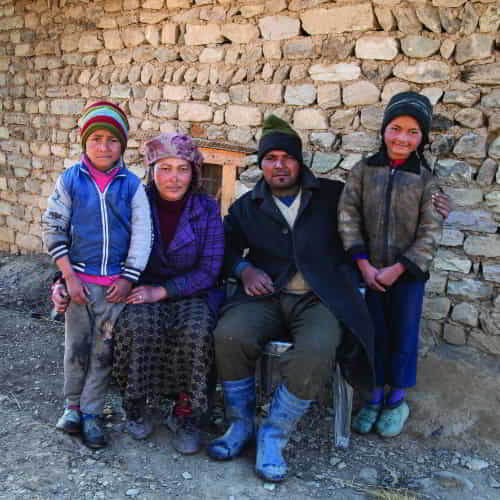
Sponsoring a family for Christmas is a great way to express such thankfulness. Donating so that a family in need receives a gift that will change their life can be a highlight of your holiday that brings true joy. And there is a great need in the world today for people like you and your family to join organizations that care for those who are consistently vulnerable and in need.
The International Monetary Fund monitors global financial conditions, looking for patterns and shared effects from the things that touch all our lives. Last year, the IMF reported, “Global economic activity is experiencing a broad-based and sharper-than-expected slowdown, with inflation higher than seen in several decades.”[1]
The World Bank reported early in 2023 that “Roughly 60% of the world’s extreme poor in 2019 lived in Sub-Saharan Africa alone, while 81% of the global poor… lived in Sub-Saharan Africa or South Asia.”[2] These numbers are on the rise. The multiplied effects mentioned earlier are driving more families into poverty. One of the sticking points of poverty is the inability to increase your income, and for many reasons, the opportunities to earn money are limited for those in poverty.
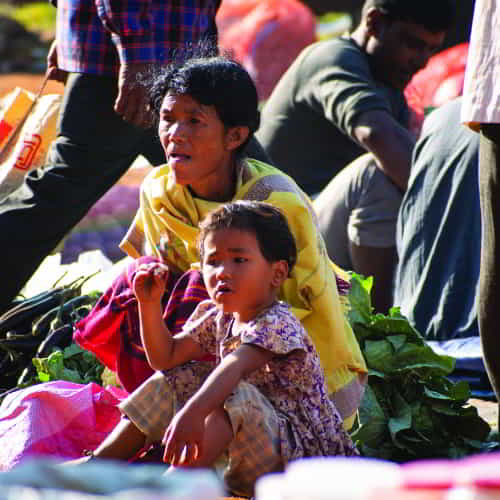
When inflation is high, it makes this worse. As the IMF stated, “Increasing price pressures remain the most immediate threat to current and future prosperity by squeezing real incomes and undermining macroeconomic stability.”[3] In other words, the economic opportunities that exist are being skewed because of inflation. A currency’s “dollar” just cannot go as far.
Families need extra ways to bring in income to offset rising expenses and to help make ends meet. Creativity and a long view of life are needed to provide solutions that benefit a family for months, if not years, to come.
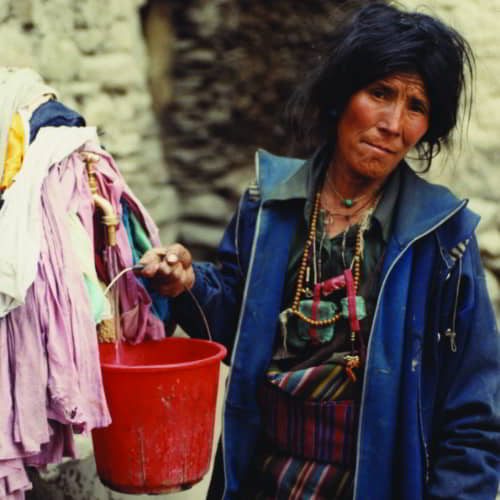
Sitara was one who understood the mounting pressures of poverty. “Twenty years ago, my husband became mentally ill and could not work. Then my oldest son died. My younger son went to work to provide for the family. He died suddenly three years ago … I had no idea what to do,” Sitara shared.[4]
Her situation is all too common in places where poverty has a firm grip. Families like Sitara’s are living on the edge, and one hard blow can decimate their finances. There is no margin for repeated disasters like the ones Sitara experienced.
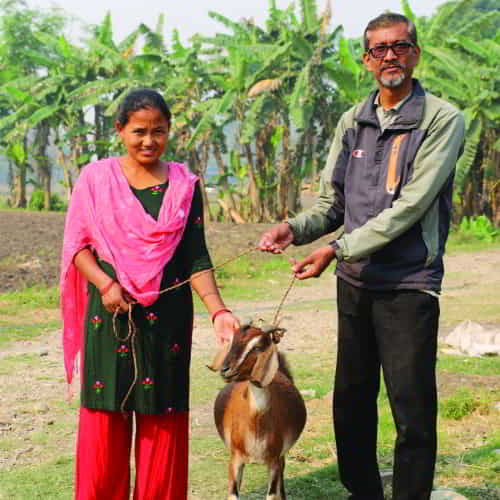
This is where GFA World knows how to love these families well. Through our Christmas Gift Catalog, a pair of goats was provided to Sitara’s family. Goats can produce milk and cheese for nourishment as well as for selling. They can also have kids, which is the beginning of a profitable livestock farm.
Sitara said, “When I received the goats, I jumped with joy. I shared with all my neighbors … I went and told them that I received goats. I’m so delighted because I have a means to earn [a living].”
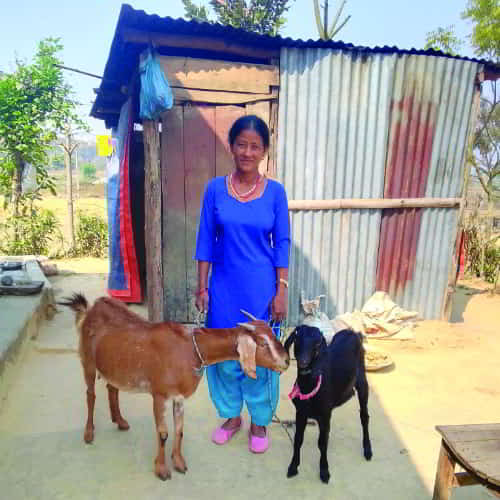
You can sponsor a goat for a family too, changing their lives for years to come and hopefully putting them on a path out of poverty. This is how to sponsor a family in need: provide a source of income that will serve them and even their community. Livestock may be just the income source they need.
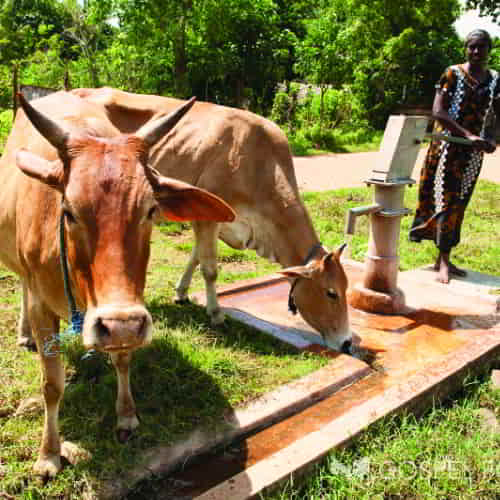
When you consider how to sponsor a family for Christmas, consider GFA! The gift catalog has many such items to send to families, like a water buffalo or chickens. Items range from just $11 for a pair of chickens to what we call the Noah’s Ark Package, at $1,886. It includes 2 chickens, 2 goats, 2 pigs, 2 cows and 2 water buffalo. Can you imagine how this would change dozens of lives? In God’s wisdom, He created His animals to multiply, providing more and more opportunities for these families to bring in income and to bless those around them, too. Where once there was no milk to purchase, a community with families blessed by GFA gifts now offers both goat’s and cow’s milk, plus cheese and other dairy items. Gifts like farm animals bring sustainability to a family living in extreme poverty. Their lives are drastically changed.
God will bless the gift you can provide. His economy is always one of more than enough. As it says in Luke 6:38, “Give, and it will be given to you: good measure, pressed down, shaken together, and running over will be put into your bosom. For with the same measure that you use, it will be measured back to you.” (NKJV)
Let God’s measure of your heart be as big as Noah’s ark!
Learn more about what is the great commission[1] “Inflation and Uncertainty.” IMF. October 2022. https://www.imf.org/en/Publications/WEO/Issues/2022/10/11/world-economic-outlook-october-2022.
[2] “March 2023 Global Poverty Update from the World Bank: The Challenge of Estimating Poverty in the Pandemic.” World Bank. March 2023. https://blogs.worldbank.org/opendata/march-2023-global-poverty-update-world-bank-challenge-estimating-poverty-pandemic.
[3] IMF. “Policymakers Need Steady Hand as Storm Clouds Gather Over Global Economy.” Accessed November 21, 2023. https://www.imf.org/en/Blogs/Articles/2022/10/11/policymakers-need-steady-hand-as-storm-clouds-gather-over-global-economy.
[4] “Sitara’s Christmas Goats.” GFA World. Accessed August 11, 2023. https://www.gfa.org/gift/sitaras-christmas-goats.