
Creating a Better Future for the Marginalized in Asia Through Vocational Training and Education
Surveying the myriad weaving of Asian society, with many millions of people enmeshed in poverty and illiteracy,[1] GFA World looks for solutions. We reach out to the “least of these”—women and children marginalized in Asia, through vocational training and education. This provides opportunities fitting for each community to provide hope for a better future for those who are currently on society’s back fringes. Youth unemployment in parts of Asia remains more than double the national average, creating barriers that trap entire families in poverty. The goal and purpose of this training, done in the name of Christ, is to help them break from the tragic grip of poverty.
The Scope of The Problem
The Critical Skills Gap
Many young people leave school with qualifications that don’t match what employers need. Asia produces far too many graduates in business and the arts, but not nearly enough in Science, Technology, Engineering, and Mathematics (STEM) subjects or vocational education. This mismatch between education and employment creates a cycle where even educated individuals struggle to find meaningful work.
Across the region, asian governments are working to address these challenges, though progress varies widely. Some nations have prioritized technical and vocational education as a pathway to economic growth. The Asia-Pacific technical and vocational education market was valued at approximately $252.7 million in 2024, reflecting growing recognition of its importance.
Literacy as Foundation
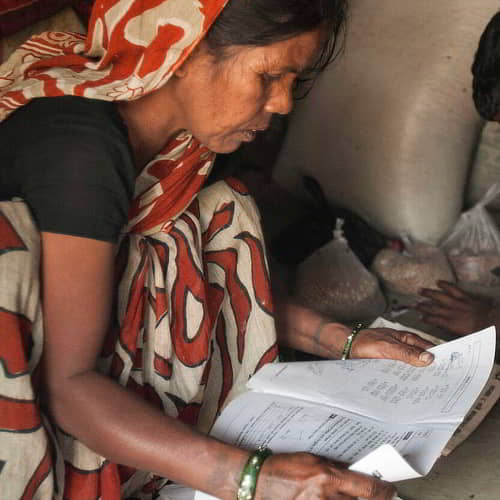
GFA World’s literacy classes are more than just for people to learn reading and writing; they are gateways to a new life. Gaining this knowledge enables people to live daily lives with mature understanding, from interpreting health information to managing money to assessing job opportunities. By 2030, an estimated 80% of jobs in Southeast Asia will require basic digital literacy and information technology skills, according to UNICEF projections. For countless women, these literacy classes are the first steps out of complete dependence on others and the first opportunity to influence events in their communities.[2]
Women face unique barriers to education and employment across Asia. The global labor force participation rate for women remains 25% lower than for men, with women more likely to cite home responsibilities as reasons for not engaging in paid work.[3] Literacy programs help bridge this gap by providing flexible learning that accommodates family responsibilities.
Building Practical Skills
Vocational training complements literacy programs, teaching individuals practical, new life skills that can generate income. Young men and women who are trained in tailoring, carpentry, welding or other basic trades can find jobs in these areas and even open small businesses. These vocational schools provide hands-on training that directly prepares students for employment. This has made all the difference in an environment where job opportunities are comparatively scarce and academic education is often not available.[4]
Programs focus on teaching relevant skills that employers actually need. Training in traditional crafts like carpentry, masonry, and weaving often leads to employment and enterprise creation. A 2024 study surveying 428 teachers across 15 countries in Asia and the Pacific found that technical and vocational education institutions are working to address Fourth Industrial Revolution demands.
The Role of Digital Learning
The rise of online learning has created new pathways for skill development. Digital platforms allow individuals in remote areas to access training they otherwise couldn’t reach. Southeast Asia’s digital economy could reach $1 trillion by 2030, but most workers still lack the digital skills to participate fully in this transformation, according to recent analyses.
In Indonesia and Singapore, only 52% of non-tech employees receive digital skills training annually. This gap threatens to widen inequality, as those without digital literacy remain locked out of opportunities created by remote work and technology-driven industries. Initiatives that combine traditional vocational training with digital skills create the most comprehensive preparation for today’s workforce.
Success Stories
Transformed Lives and Communities
The impact of these programs is best reflected in the stories of those whose lives have changed. Women who once had no perspectives beyond their home duties are now able to successfully run tailoring shops, help their families with income and gain respect among the community. These success stories demonstrate how vocational education and training creates lasting economic opportunity. Children who could once have become a part of the child-labor market are able to stay in school, now dreaming about becoming teachers, healthcare providers or running their own businesses.
The literacy program offered by GFA World was ’empowering’ for one woman, who was able to start a small business with other women to provide an income for their families.[5] The example of this success story shows how the lives of entire families can be changed thanks to the instruction and training a few women received and the increased opportunities that it led to.
Breaking Poverty Cycles
Skills training provides a proven pathway out of poverty. In countries across Asia, 60-70% of individuals who access vocational education successfully transition into employment.[6] This dramatic impact shows how practical skills create immediate economic opportunity.
The connection between vocational education and poverty reduction extends beyond individual families. When communities gain access to training, entire neighborhoods experience transformation. Improved digital skills alone could add $1 trillion to Asia’s GDP by 2030, the Asian Development Bank projects.
Bridging to Higher Opportunity
While higher education remains out of reach for many, vocational training provides an alternative path to professional success. Technical programs often lead to employment faster than traditional academic pathways. Students gain certifiable skills that employers recognize and value.
These programs particularly benefit those who face the steepest barriers to opportunity. Marginalized groups including women, rural communities, and those from low-income families find that skills training opens doors previously closed to them. The flexibility of vocational programs allows students to balance learning with family and work responsibilities.
A Call to Partnership
GFA World’s transformational work in providing education and vocational training is a crucial beginning to community change in Asia. However, the continuation and expansion of these programs is dependent on kind-hearted people who recognize the value of empowering the otherwise marginalized parts of the local populations.
We encourage our readers to participate in these programs that can change an individual’s life: Support them and these ongoing changes! By doing so, you can help enhance literacy classes, develop more opportunities for training in a trade and assist more people to transform their own lives, as well as their communities. Join us in this mission to help provide this practical help and transform lives through Christ’s love.
Learn more about national missionaries in Asia[1] “Education.” UNICEF South Asia. Accessed April 11, 2024. https://www.unicef.org/rosa/what-we-do/education#:~:text=While%20great%20strides%20have%20been,the%20lower%20secondary%20level%20are. Access date.
[2] “Women’s Literacy Program.” GFA World. Accessed April 11, 2024. https://www.gfa.org/women/literacy/.
[3] International Labor Organization (2023).
[4] “Donation Center.” GFA World. Accessed April 11, 2024. https://www.gfa.org/donation/items/vocational-training/.
[5] “Literacy Opens Business Opportunities For Women.” GFA World Updates & Reports from the Mission Field. August 13, 2020. https://gospelforasia-reports.org/2020/08/literacy-opens-business-opportunities-woman.
[6] “The Power of Vocational Education in South Asia.” BORGEN Magazine. June 23, 2024. https://www.borgenmagazine.com/vocational-education-in-south-asia/.