
Share the Good News: The Heart of GFA World’s Mission
Jesus’ call to share the Good News with others is central to the mission at GFA World. The ‘Good News’ refers to the message of salvation and hope through Jesus Christ. This message is not a mere slogan but a profound call to bring hope to people who live in despair, to lift them out of poverty, and to shine the light of Jesus into places where hopelessness is overwhelming. Many people have not heard this Good News in parts of Africa and Asia[1]. However, through the impactful work of national missionaries in these areas, the hope of the Good News is spreading to the hearts and homes of so many, inspiring hopefulness and transformation.
At the core of the Good News stands a promise so simple and so vast that it has reshaped human history: God loves the world. Not an abstract love from a distance, but a love so specific and so costly that Scripture captures it in a single verse — John 3:16. The verse declares that God loved the world so deeply that He gave His only Son, so that anyone who believes would not perish but receive everlasting life. This is what national missionaries carry into slums, rural villages, and forgotten communities. It is not a political agenda, not a cultural export, but the simple, world-altering truth that every person matters to God.
Equipping Missionaries to Share the Gospel
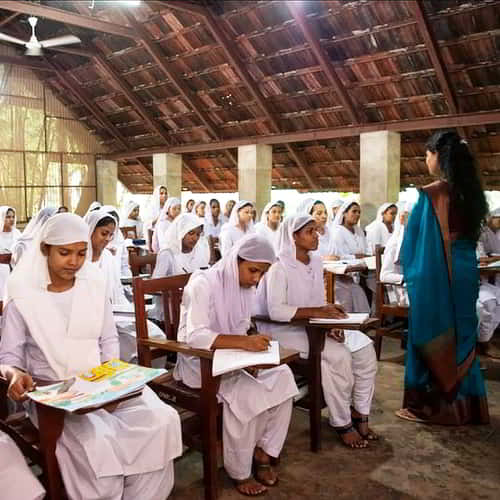
At GFA World, the ministry trains and equips national missionaries to share the Good News in their countries, establishing churches where there are none. These dedicated men and women, born and raised in the countries they serve, possess a significant advantage over foreign missionaries in reaching their people. They are fluent in the local language, deeply understand the culture, and share life experiences with those they meet. This gives them a blessed opportunity to connect with people personally and compassionately, making their mission highly effective.
What keeps these workers going through hardship and opposition is not just human effort. Scripture teaches that the Holy Spirit equips believers for the work of witness, giving them words when they have none and courage when fear would otherwise prevail. National missionaries often describe moments when they sensed divine guidance — a conversation that opened an unexpected door, a healing that stirred a whole village to listen. Or a Scripture that spoke directly to someone’s hidden pain. The Holy Spirit’s presence in their work is not a theological abstraction; it is the daily reality that sustains them. This reliance on the Spirit’s leading sets national missions apart from purely humanitarian efforts. The goal is not simply to improve living conditions — though that happens — but to introduce people to the One who transforms lives from the inside out.
Love in Action: How National Missionaries Serve
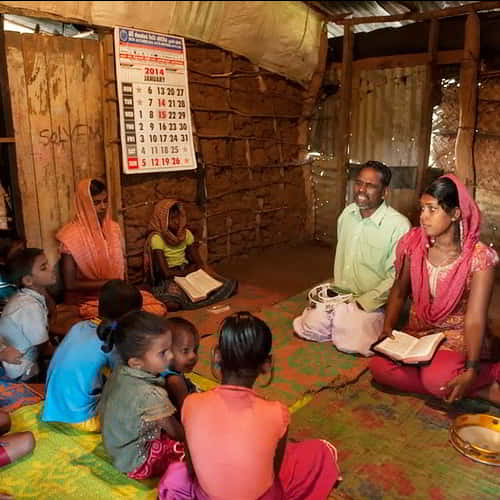
In many of the countries GFA World serves, foreign missionaries face severe restrictions and may even be prevented from publicly expressing their faith[2]. National missionaries, however, can stay and minister much more freely. They blend in, not because they hide who they are, but because they are “one with the people.” In Paul’s words, they have learned to “become all things to all men” (1 Corinthians 9:22 NKJV). National missionaries are the hands and feet of Jesus, and they share His love in practical, tangible ways.
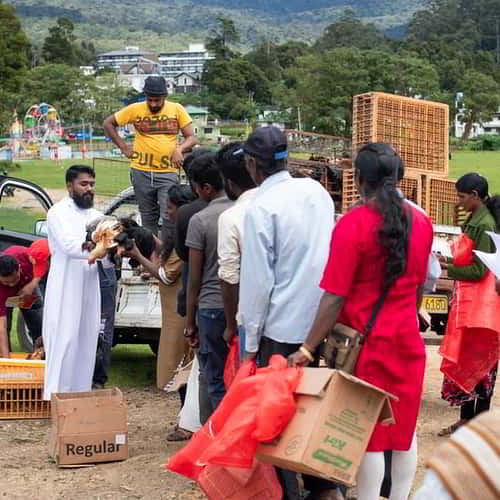
GFA missionaries[3] respectfully reveal the love of God with their words and actions. As they meet people’s physical and spiritual needs, they are examples of God’s love being lived out in their communities. For instance, national missionaries provide clean water through Jesus Wells, wells dug in the name of Jesus to provide local, safe water to communities that lack it.[4] They also give income-generating gifts to poverty-stricken families[5] and improve the living conditions in their villages with things like outdoor toilets.[6] These actions have led to tangible changes, such as better health as families gain access to drinkable water, children being able to attend school, and communities experiencing economic growth. GFA missionaries also help parents understand the importance of educating their children, which opens doors for a brighter future.
This is the heart of the Good News. National missionaries demonstrate a love that people can see and feel. Even when faced with resistance or persecution, their faithfulness to God and compassion for others shine brightly. Through the work of national missionaries, many people come to believe in Jesus—not because they were persuaded to believe but because they experienced God’s love firsthand.
When someone encounters the Gospel for the first time in a village with no church, no printed Bible, and no Christian neighbor, the message they hear is simple. God offers eternal life through faith in His Son. That promise — that those who believe will not perish but have eternal life — reorders everything. A farmer who has known only debt and drought hears that his life has purpose beyond the next harvest. A widow cast aside by her community hears that she is seen and loved by the Creator. The promise of eternal life is not merely a future hope; it reshapes how people live today, giving them dignity, courage, and a reason to endure.
The 10/40 Window: Urgency and Opportunity
GFA World’s missionaries serve in the 10/40 window, a vast region stretching from West Africa to East Asia. This region, named after its latitude and longitude, is home to a significant portion of the world’s population, including many who have not heard the Good News about Jesus. Many live in remote, impoverished communities without access to essential resources, let alone the Good News.[7] The situation is urgent and should make readers feel responsible and prompt action now to proclaim the Good News.
The staggering scope of the 10/40 Window can feel overwhelming: more than two-thirds of the world that He gave His Son for lives within this belt. Yet the region has minimal access to churches, Scripture, or Christian witness. The gap between the resources concentrated in Christian-majority nations and the spiritual poverty of the 10/40 Window is among the most urgent realities in global mission today. National missionaries serve as bridges across that gap — local believers who already speak the language, understand the customs, and have earned the trust of their neighbors.
The biblical mandate behind this work is unmistakable. Before His ascension, Jesus commissioned His followers to make disciples of all nations — a command that has driven Christian mission for two millennia. Today, that command falls on the church in every generation, and national missionaries are among the most direct expressions of obedience to it. They do not wait for the unreached to come to them; they go, often at great personal cost, to places where the name of Jesus has never been spoken. The 10/40 Window remains one of the most strategically significant mission fields on earth, home to the majority of the world’s least-evangelized people groups. In many of these regions, the only Christian witness comes through workers who were born there. They speak the heart language of the community and have committed their lives to seeing the church take root in their own soil. The task is immense, yet the strategy is proven: equip local believers, send them to their neighbors, and trust God for the harvest.
Why National Missions Are Cost-Effective
The work is far from easy, yet these GFA missionaries are not intimidated by the challenges of ministering in the 10/40 window. They understand the risks, yet they are deeply committed to bringing the hope of Jesus to those who need it most. They enter slums and rural villages, often putting themselves in danger to bring hope to hopeless people. Their dedication and commitment make those who support them feel connected and part of a shared mission as they humbly share the love of God in a way that resonates with the people they serve. Their courage is truly inspiring.
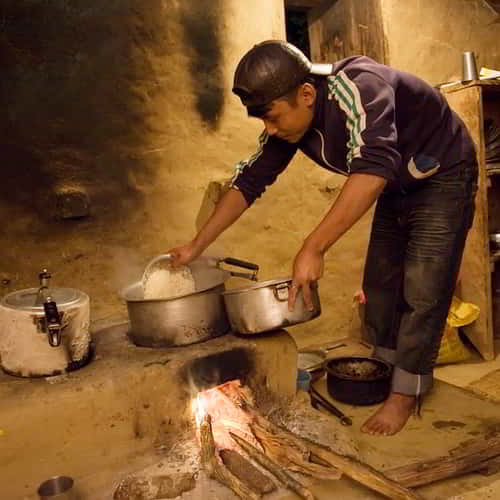
A compelling aspect of GFA World’s mission is the cost-effectiveness of supporting national missionaries. National missionaries can live on around $450 monthly on average depending on family size. They reside in homes like those of the people they serve, eat the same food and wear the same clothing. Jesus became one with the people he served, and national missionaries do the same by embracing a simplistic lifestyle to spread the Good News effectively.
The model is not just cost-efficient — it reflects the incarnation itself. God did not send help from a distance; He sent His Son Jesus to live among the people He came to save. In the same way, national missionaries do not parachute into communities with outside solutions. They live next door. They walk the same dusty roads, shop at the same markets, and bury their own dead in the same soil. This shared life is what gives their witness authenticity. When a national missionary says that God understands suffering, the listener knows the speaker does too.
This incarnational approach — living among the people, sharing their hardships, earning trust through presence rather than programs — is one reason indigenous missionaries are often more effective than foreign workers. This is especially true in contexts where outside influence is restricted or viewed with suspicion. A national missionary does not need a visa, a cultural orientation, or a language course. From the first day of ministry, they can focus entirely on evangelism and church planting. They already understand the spiritual landscape — the folk beliefs, the family structures, the unspoken rules that govern community life. This fluency cannot be acquired through training; it is woven into their identity. It is why a single national missionary can plant multiple churches in a region where a foreigner might struggle to gain a hearing. And because they live on far less than a Western missionary needs — often under five hundred dollars a month — the money sponsors give stretches further, multiplying every dollar’s impact.
Your Role in Sharing the Good News
Sponsorship is not a transaction — it is a partnership in the Great Commission. Every gift helps share the Good News of Jesus in places where His name has never been spoken. When you sponsor a missionary, you are not merely funding a program; you are standing with a brother or sister who has counted the cost and chosen to go. The connection between sponsor and missionary creates a bridge across continents — a reminder that the body of Christ is not bound by geography or language but held together by a shared love for the One who first loved us. You can sponsor a national missionary who already knows the language and community and help sustain the quiet, faithful work that transforms villages one life at a time.
Behind every statistic — every well dug, every child taught to read, every church planted in a village that had none — stands a real person who said yes to God’s call. National missionaries do not make headlines. They do not publish books or appear on conference stages. They wake before dawn, pray over dusty roads, knock on doors that may never open, and return to homes that would be called humble by any Western standard. Yet they persist, because they have seen what the Good News does. They have watched a widow’s despair turn to hope, a village’s hostility soften into curiosity, a child’s empty stomach fill because someone gave a goat, and a family’s shame dissolve when clean water flowed from a Jesus Well. These quiet, daily transformations are what the Great Commission looks like on the ground. They are the reason sponsorship matters — not as a distant transaction but as a living link between two people who share one faith and one Lord. When you sponsor a missionary, you are not sending money to an organization; you are joining a story that God is already writing in a village you may never visit but whose eternity you are helping to shape.
Even a small monthly pledge from you can make a considerable impact in sharing the Good News. It can help sustain a national missionary, providing them with the necessary resources to continue their vital work. But your giving is not just a financial investment; it’s a spiritual investment in the lives of people who have dedicated themselves to sharing the Good News. Your small contribution can significantly affect a community and is a powerful way to be part of this mission. Sponsors can also pray for their missionaries, receive updates on their work and connect with the people whose lives are being changed through them.
For only $45 a month, you can become a sponsor and join the mission to go and tell the Good News to people who have not heard it. You will hear about villagers gaining access to clean water and families rising from poverty because of income-generating gifts they receive. Your partnership will allow you to share in the joy of knowing you are helping to bring the love of Jesus to people in desperate need.
Discover how to support GFA World’s Christian missionary work overseas[1] “Joshua Project.” Joshua Project. Accessed June 21, 2026. https://joshuaproject.net/.
[2] “World Watch List 2026.” Open Doors. Accessed June 21, 2026. https://www.opendoors.org/en-US/persecution/countries/.
[3] “About National Missionaries.” GFA World. Accessed November 04, 2024. https://www.gfa.org/sponsor/.
[4] GFA World. “The First Jesus Well: Still Going Strong for 20 Years.” Accessed June 20, 2025. https://www.gfa.org/videos/first-jesus-well/.
[5] GFA’s Christmas Gift Catalog. “Critter Campaign – GFA World.” Accessed June 20, 2025. https://www.gfa.org/giving/christmas/not-just-goats/.
[6] Ken Walker of InChrist Communications. “Taking the Toilet Challenge.” GFA World, May 18, 2021. https://www.gfa.org/special-report/open-defecation-outdoor-toilets-improve-sanitation/.
[7] Project, Joshua. “10/40 Window.” Joshua Project. Accessed June 20, 2025. https://joshuaproject.net/resources/articles/10_40_window.