

What Is the Great Commission

Why is the Great Commission important?

Asking “Why is the Great Commission important?” is like asking, “Why was Jesus’s death important?” Both are vital to Christianity, and believers cannot ignore that fact. One of the most famous verses is John 3:16, which says, “For God so loved the world that He gave His only begotten Son, that whoever believes in Him should not perish but have everlasting life.” (NKJV). The world that God loved in this verse is the same world Jesus said to go into in Matthew 28:18–20, Mark 16:15, Luke 24:46–47 and Acts 1:8. Repetition in the Bible is often indicative of emphasis or importance, so the fact that the Great Commission is repeated so many times should tell us something.

The repeated appearance across multiple Gospel accounts underscores the significance of the Great Commission in the life of the early church. Each writer emphasized different aspects, creating a comprehensive picture of this final command. Wikipedia notes that the Great Commission has become a central tenet in Christian theology, emphasizing ministry, missionary work, and the call to make disciples of all nations.

The Foundation of Christ’s Authority

Before Jesus gave the Great Commission, He declared His divine authority. Mission to the World explains that Christ’s claim to “all authority in heaven and on earth” was not a new concept but likely referenced Daniel 7:13, where dominion is given over all peoples and nations baptizing them into the family of God. This authority, given by the Father and of the Son, empowers believers to carry out God’s mission globally.

The disciples went to Galilee as instructed, meeting the resurrected Christ on a mountain.[6] There, Jesus calls His followers to a task that would define the church’s purpose for centuries to come. The scope of the great Commission extends beyond geographical boundaries to every culture and language group on earth.

Teaching and Discipleship

Central to the Great Commission is teaching them to obey everything Christ commanded. Got Questions points out that in the original Greek, “make disciples” is the only direct command in Matthew 28:19-20, while going, baptizing, and teaching are participles describing how discipleship happens. This means fulfilling the great commission requires more than initial good news proclamation—it demands ongoing instruction in Christ’s teachings.

The phrase “obey everything I have commanded” encompasses the full breadth of Matthew’s gospel, from the Sermon on the Mount to teachings on forgiveness and servanthood. Disciples become students who then become teachers, perpetuating a cycle of spiritual growth across generations. This pattern ensures that the gospel message remains anchored in Christ’s original teachings while adapting to diverse cultural contexts.

The role of the Holy Spirit and teaching cannot be separated from this mission. Before ascending, Jesus instructed His followers to wait for the promised Spirit, who would provide supernatural power for witness-bearing. This divine partnership ensures that human effort alone never carries the weight of world evangelization—God Himself empowers the work.

The Urgency of Reaching the Unreached

Practically, the Great Commission is important because it is urgent. In South Asia, 80,000 people will die today without having had the chance to hear about God. According to Joshua Project, over 3,209 frontier people groups—nearly 1.9 billion people—live with almost no response to the gospel.

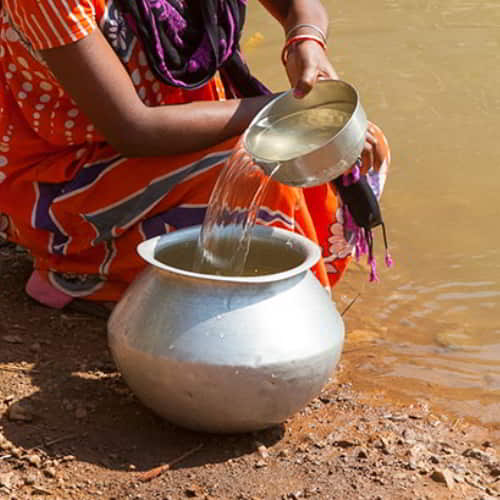
Globally, there are 2.7 billion people who have never even heard the name of Jesus, living enslaved to powerless idols and without hope or peace. Often, those who have yet to hear the Gospel are also the poorest.[1] They do not have access to things like adequate food or clean water.

Women are often forced to draw water from nearby stagnant ponds that may also function as latrines, leading to disease and even death, shortening the window of opportunity to share the gospel.[2]

Global Frontier Missions reports that approximately 7,188 people groups remain unreached, representing over 42% of the world’s population. The vast majority—85%—exist within the 10/40 Window, yet less than 3% of missionary work focuses on these least-reached communities. This disparity reveals both the magnitude of the need and the importance of the great commission in our generation.

GFA World’s Response to the Call

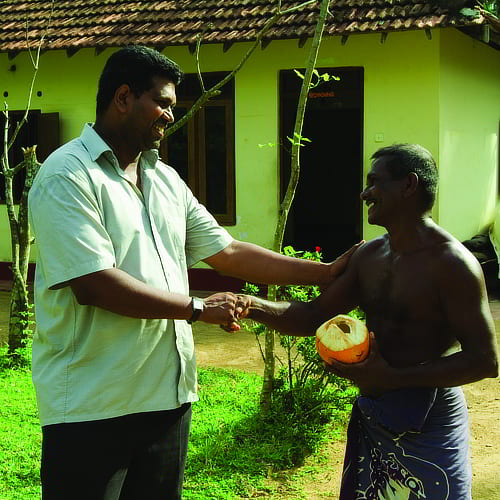
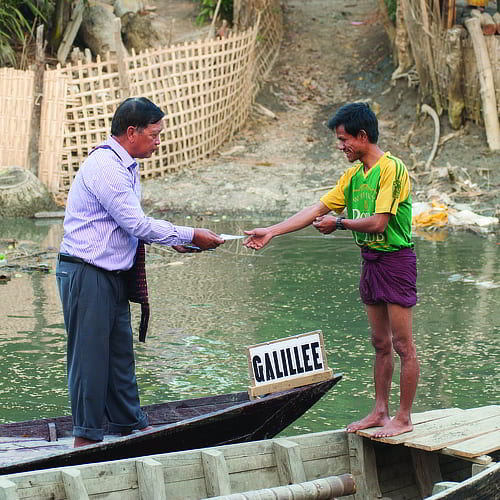
This is why GFA World is working to meet these physical needs, to show people God’s love and care for them. It is quite difficult because over 85 percent of Asian countries do not allow Western or other outside missionaries to share the gospel or establish churches. Thus, GFA has focused on training and sending out national missionaries. These men and women are from the areas where they work, so they are not seen as outsiders and have fewer restrictions. They know the language, the beliefs and the needs of the people.

National missionaries bridge cultural and linguistic barriers that often hinder cross-cultural ministry. They understand local customs, navigate social structures effectively, and build trust within their communities in ways that outsiders cannot. This indigenous approach has proven highly effective in regions where traditional foreign missions face significant obstacles.

Government restrictions on foreign religious workers have actually catalyzed a powerful indigenous missions movement across Africa and Asia. Local believers, trained and equipped, now lead evangelistic efforts in their own contexts with remarkable fruitfulness. They minister without the suspicion that often accompanies Western missionaries, allowing the gospel to be heard on its own merits.

GFA has Bible colleges in many countries where men and women are receiving training that will enable them to not only effectively share the gospel, but establish churches in communities without one. Over 98 percent of graduates will go on to serve in areas where the gospel has never been shared before.[3]
These training centers equip future ministry leaders with theological education, practical ministry skills, and spiritual formation. Students learn biblical languages, church history, systematic theology, and cross-cultural communication—all essential for effective gospel ministry in diverse contexts. The curriculum emphasizes both heaven and on earth realities, preparing graduates to address spiritual needs while also serving communities holistically.

Many graduates serve in contexts where they face opposition, yet they remain committed to the mission Christ entrusted to His church. Their faithfulness demonstrates that the Great Commission transcends comfort and convenience, calling believers to sacrificial service for the sake of those who have yet to hear.

The Matter of Eternal Significance

Understanding why the great commission matters requires grasping the eternal stakes involved. Global Commission notes that 70,000 people die every day in the unreached world without Jesus, highlighting the time-sensitive nature of gospel proclamation. Each passing day represents thousands of individuals entering eternity without having encountered the message of salvation.

The Commission connects directly to God’s redemptive plan revealed throughout Scripture. From God’s promise to Abraham that all nations would be blessed through his offspring, to the prophetic visions of every tribe and tongue worshiping before the throne, the Bible consistently points toward global worship of the one true God.[7] The Great Commission is not merely a New Testament addendum but the culmination of God’s ancient purpose to reconcile all people to Himself.

When believers grasp this eternal perspective, missions shifts from optional activity to core identity. The church exists not primarily for its own comfort or growth but as God’s chosen instrument for bringing the gospel to every people group on earth. This calling shapes priorities, influences resource allocation, and transforms how congregations understand their purpose in the world.

History demonstrates that churches focused outward on mission tend to remain vibrant and growing, while those focused inward on maintenance tend toward decline. The Great Commission provides a God-given vision that unites diverse believers around a common purpose larger than themselves, creating unity through shared mission rather than mere institutional loyalty.

How You Can Participate

For just $45 a month, you can sponsor a national missionary as they work in the world’s most impoverished areas.[4] Or, you can donate toward drilling a fresh water well in a village without access to clean water,[5] giving missionaries an opportunity to God’s love in a very practical way.

Every believer plays a vital role in fulfilling the Great Commission, whether through prayer, financial support, or personal witness. Some are called to cross oceans, while others cross the street—but all are called to participate in God’s global redemptive work. Your partnership with GFA enables front-line workers to reach communities that would otherwise remain in spiritual darkness.

Prayer remains the most powerful tool available to believers engaged in global missions. Through intercession, Christians worldwide can influence spiritual battles in distant places they may never physically visit. Regular, informed prayer for specific people groups, missionaries, and ministry challenges connects believers directly to the front lines of gospel advancement.

Financial partnership multiplies impact exponentially by enabling trained workers to serve full-time in strategic locations. The relatively small investment of monthly support allows indigenous missionaries to reach entire communities that would otherwise have no gospel access. This leveraged approach to missions maximizes kingdom impact while respecting local leadership and cultural contexts.

Consider partnering with GFA to answer and respond to the important question, “What is the Great Commission?”

Learn more about what is the great commission

[1] “Has Everyone Heard?” Joshua Project. Accessed September 2023. https://joshuaproject.net/resources/articles/has_everyone_heard.
[2] “Find Your Place in the Great Commission.” GFA World. Accessed July 12, 2023. https://www.gfa.org/place/.
[3] Ibid.
[4] “National Missionaries.” GFA World. Accessed July 12, 2023. https://www.gfa.org/sponsor/.
[5] “Clean Water.” GFA World. Accessed July 12, 2023. https://www.gfa.org/water/.
[6] “Great Commission.” Wikipedia. https://en.wikipedia.org/wiki/Great_Commission. Accessed February 2026.
[7] Revelation 7:9 (NKJV).