



What Is the Great Commission and How Is GFA World Fulfilling It?
People have asked, “What is the Great Commission?” for centuries. Christians want to understand and follow this injunction, but there has been some debate about what the Great Commission means and how it applies. The most well-known iteration of the Commission is in Matthew 28:18–20. Before Christ ascended into heaven, He told His followers, “All authority has been given to Me in heaven and on earth. Go therefore and make disciples of all the nations, baptizing them in the name of the Father and of the Son and of the Holy Spirit, teaching them to observe all things that I have commanded you; and lo, I am with you always, even to the end of the age.” (NKJV).

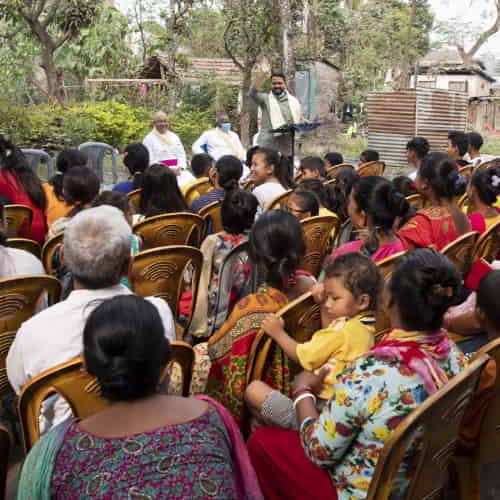
Does the Great Commission apply to all believers? Some would say that Christ’s words in Matthew 28 were only directed at the people present. Other places in the Bible where the Commission is mentioned, like Acts 1:8, specifically include the words “Jerusalem, and in all Judea and Samaria,” which are specific locations to the time and place of the Bible. Christians in many places in the world are not close to Jerusalem or Judea, so they cannot be expected to obey these verses literally. While it is true that there is an audience-specific aspect of the Great Commission, each time it is written in the Bible it also includes words to indicate the need to preach the gospel to the whole world:
- Matthew 28:19 says to “make disciples of all nations.”
- Mark 16:15 says, “Go into all the world and preach the gospel to all creation.”
- In Luke 24:47, Jesus said that “repentance for the forgiveness of sins will be preached in [the Messiah’s] name to all nations.”
- In Acts 1:8, the list of places to be witnesses ends with “the ends of the earth.”
With so many reminders to preach to all nations and to the ends of the earth, it becomes clear that the original hearers of the Great Commission could not have accomplished this strictly on their own. They did not know about some nations on the other side of the globe, and traveling to them was impossible. Even now, there are many people groups that have never heard the Gospel all over the world, so the Commission has not been fully accomplished yet. God’s name has not been preached in all nations, so believers are still responsible for asking, understanding and obeying the question, “What is the Great Commission?”
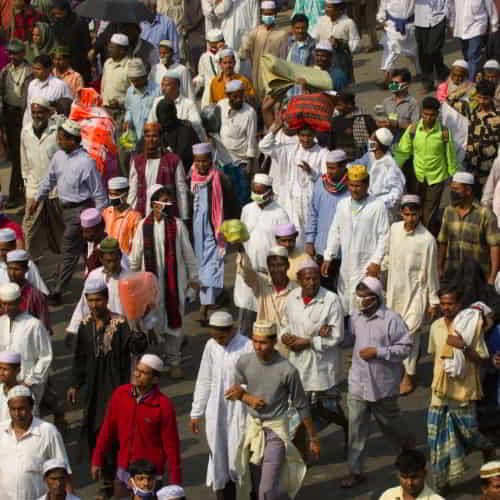
The repetition of the Great Commission also indicates that it is highly important. Why is the Great Commission important? According to Acts 1:9, it is the last thing Jesus said before His ascension, so it is the final thing He wanted His followers to know. Besides that, there are an estimated 7,391 people groups around the world that have never heard of Jesus―over 40 percent of the global population. There are thousands more who live in people groups that have been only minimally reached with the gospel.[1] In South Asia alone, 80,000 people die each day without having had the chance to hear about Jesus.[2] There is still a lot of work to be done.
Sobering statistics like these encourage missions organizations like GFA World to keep working. Little by little, one person, one family and one community at a time, people are choosing to follow Christ. Meeting people’s physical needs is a tangible display of God’s love at work. Through sponsorship, disaster relief, providing clean water, working with widows and orphans and ministering to those with leprosy, GFA has made a major impact in many communities across Asia and now in Africa too. Helping someone escape the hopeless circumstances that trap them opens their eyes to the hope and peace of Christ.
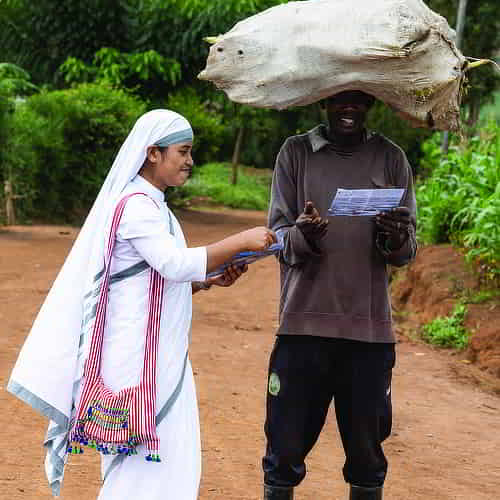
By sharing the gospel and loving people in this way, GFA is helping to fulfill the Great Commission. What is the Great Commandment and the Great Commission? It is possible these terms have been used interchangeably, but they do refer to two different things. The Great, or Greatest, Commandment is found in Matthew 22. Jesus says it is to love the Lord with all your heart, soul and mind; the second greatest is to love your neighbor as yourself. This is not quite the same as the Great Commission to make disciples of all nations; however, the two ideas are connected. Loving God includes obeying His commands, which contain the Great Commission. Loving your neighbor means sharing the love of God with them, which is the Great Commission as well. Thus, the Great Commission is how believers accomplish the Great Commandment.
Consider partnering with GFA in the effort to fulfill the Great Commission and obey the Great Commandment. Our ministries rely on the prayers and generous donations of people to continue, and there is still much work to be done around the world. Sponsoring a child or a national missionary takes just around a dollar a day. Or donate toward building fresh water wells or providing disaster relief and help for those in crisis. Every little bit counts. Also, ask yourself, “What is the Great Commission and what does it look like in my life?”
Learn more about what is the 10/40 window
[1] “Global Dashboard.” Joshua Project. Accessed July 12, 2023. https://joshuaproject.net/people_groups/statistics.
[2] “Find Your Place in the Great Commission.” GFA World. Accessed July 12, 2023. https://www.gfa.org/place/.