
How Have Christian Missionaries in South Asia Historically Impacted the Region?
The first of many Christian missionaries in South Asia may have been the Apostle Thomas. These early accounts help us see that faith often travels through ordinary people and simple steps. They also remind us that lasting influence is usually built over time. After the Day of Pentecost, the message of Jesus spread to other parts of the world. According to many traditions, one country in South Asia was reached by Thomas in AD 52.[1] He was later martyred there.
It wasn’t until much later that Christianity had a strong influence in that same country. Europeans began to settle there in 1608, bringing Christianity with them.[2] As history progressed, Christian missionaries began building schools and printing presses. In these various ways, literature and the message of the Good News went out among the people. Over time, printed materials also made it easier for teaching and learning to continue from one generation to the next. In many communities, that steady work supported families in practical, everyday ways.
Through the decades, Christian missionaries have been credited with these significant contributions:
These contributions are often remembered because they touched daily life—language, learning, health, and help in hard seasons. They also show that service can be patient and quiet, not rushed or forceful.
- Language – Christian missionary Constanzio Beschi made the one local alphabet suitable for the printing press. He also produced a dictionary. Other missionaries after him are also credited with noteworthy works in language, grammar studies and literature.[3] Language work can help learning feel familiar, especially for new readers. It can also support teachers who need simple tools for literacy and study. When communication is clear, people can share ideas with less confusion and more confidence.
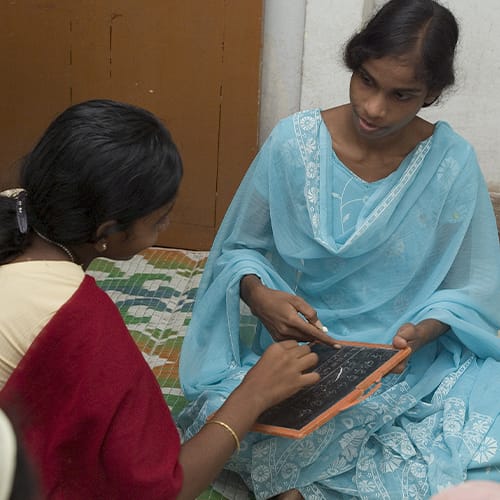
- Educational Opportunities – Christian missionaries were the first to promote education for women there in 1819. This launched a push for wider promotion of women in learning, including higher education.[4] Education can help women read signs, keep basic records, and support children’s learning at home. It can also build confidence when someone realizes she can learn something new. In many settings, a classroom can become a safe place to ask questions and grow.
- Social Changes – William Carey is credited by many mission historians for supporting reforms that aimed to protect vulnerable people and strengthen community life. When he died in 1834, he had spent 41 years in one country of South Asia. He is credited with establishing a foundation for “Bible translation, education and social reform.”[5] Social reform often looks like steady, long-term effort. It can include learning local needs, listening well, and supporting work that brings dignity to families. It also works best when it respects local voices and local leadership.
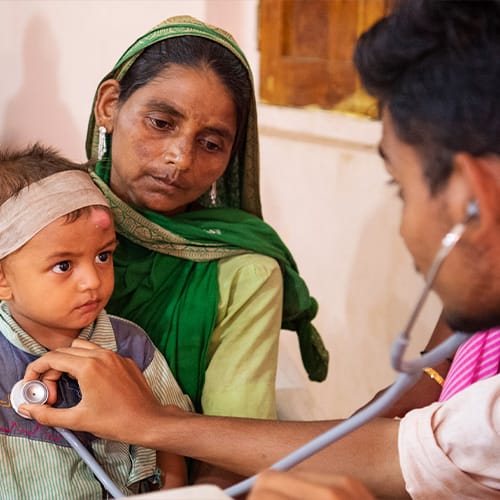
- Medicine – Christians have strongly impacted the medical field in South Asia, bringing hospitals and medical care. Missionaries have also established programs for people with mental and physical disabilities. They brought much care and compassion to those who are abandoned, abused, or exploited. Medical service can include prevention, basic training, and patient follow-up, not only emergency help. When care is offered with respect, it can reduce fear and build trust. Even small acts—like health education or a listening presence—can bring comfort to a family. Today, several Christian health networks in South Asia express a commitment to make care more accessible, especially for people who live far from reliable clinics and have few resources. That kind of long-view care can help families feel less alone when illness comes.[6]
- Disaster Relief – Indigenous missionaries and Christians have often been among the first to provide immediate and long-term help following natural disasters. Immediate help can meet urgent needs like shelter, clean water, and food. Long-term care can include rebuilding, emotional support, and helping families regain stability. Local believers can also stay present after outside attention has moved on.
This kind of steady service helps explain why many people still talk about missionaries’ impact across generations. It also sets the stage for the unique role many women have carried in compassionate ministry.
Across history, God has often used courageous women who shaped mission field work long after their time. One example is Gladys Aylward. She traveled to another part of Asia, welcomed orphans, and led many children to safety during a time of war. Her story shows how one woman’s obedience can protect the vulnerable and open doors for sharing the Good News.[8] Another example is Amy Carmichael, a woman missionary who served in South Asia for more than fifty years. She rescued exploited children and began a fellowship that still cares for young people today.[9] Their work among the poor and overlooked shows the strength of many Christian women who have crossed cultures to serve. Their stories also show that care is often personal. It can mean noticing one child, one mother, or one family at a time. From the outside, that work can look small, but it can carry lasting weight.
Today, national women missionaries in South Asia follow this same path. Many of these women live in South Asia, close to the communities where they serve. Many have lived through poverty, marginalization, or widowhood, so they understand the struggles of their neighbors. They often know the language of daily life and the rhythms of local relationships. They also understand which topics are sensitive and what kind of help feels respectful. That awareness can protect trust and reduce misunderstanding.
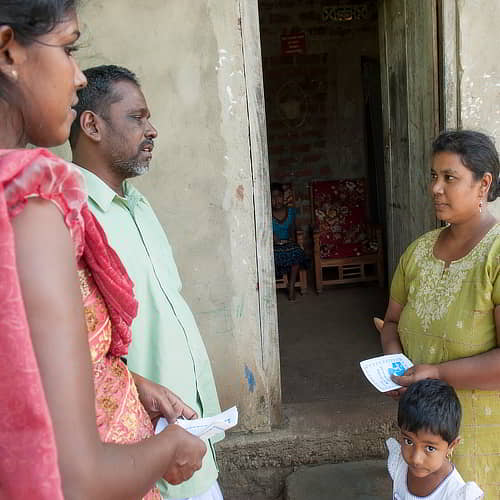
As they visit homes, pray with families, and offer practical help, they show Christ’s love in ways that fit local culture and support the leadership of the local church.[10] When a woman welcomes it, they respond by sharing the Gospel with gentleness and clarity. They also know when to listen first. Trust often grows through consistent care and patient friendship.
Their steady work encourages future generations of believers—especially girls and young women—to see how God can use their gifts to bless communities where there is not yet a local church across the region. It can also encourage older women who may feel unseen. When someone sits, listens, and prays, a home can feel less lonely.
Over the years, Christian male and female missionaries, indigenous to their own countries, have carried on many of these endeavors and increased their impact. Today, GFA World supports national workers serving as the hands and feet of Jesus Christ in four main ways: Sponsoring national missionaries to minister to people’s needs, sponsoring children, investing in community development and helping families in need of care or during disasters.[7] This kind of support can help provide training, practical tools, and steady encouragement. It can also help local workers remain faithful in daily service when needs feel heavy.
If you live in North America, it can be easy to think of missions as something far away. But many believers learn humility by listening closely to neighbors with different stories, including Native American communities. That same humility matters when we pray for workers in South Asia. You can support this work through prayer, encouragement, and giving. And if you ever serve in a short term way, let it be marked by listening, respect, and kindness.
Learn more about women missionaries[1] “Did the Apostle Thomas take the gospel all the way to India?” Got Questions Ministries. https://www.gotquestions.org/Thomas-India.html. Accessed September 5, 2022.
[2] “When and why did the British first choose to invade India?” India Today. https://www.indiatoday.in/education-today/gk-current-affairs/story/when-and-why-british-first-came-to-india-1591166-2019-08-24. Accessed September 5, 2022.
[3] “History of Christian Impact On India” Encyclopedia.com. https://web.archive.org/web/20210126213953/https://www.encyclopedia.com/international/encyclopedias-almanacs-transcripts-and-maps/christian-impact-india-history. Accessed September 5, 2022.
[4] Kennedy, Rev. Dr. S.M. John. “Christian Contribution to Indian Education.” https://www.sxcejournal.com/jan-mar-2018/paper6.pdf. Accessed October 5 2022.
[5] “William Carey.” Christianity Today. https://www.christianitytoday.com/history/people/missionaries/william-carey.html. Accessed October 5, 2022.
[6] “Faith-based Healthcare in India.” CCIH. https://www.ccih.org/faith-based-healthcare-in-india/. Accessed October 5, 2022.
[7] “How is GFA transforming communities?” GFA World. https://www.gfa.org/about/. Accessed October 5, 2022.
[8] “Gladys Aylward,” Wikipedia, accessed December 3, 2025, https://en.wikipedia.org/wiki/Gladys_Aylward.
[9] “Amy Carmichael,” Wikipedia, accessed December 3, 2025, https://en.wikipedia.org/wiki/Amy_Carmichael.
[10] “The Role of Women as Missionaries,” Equip the Called, August 1, 2014, accessed December 3, 2025, https://equipthecalled.com/swjt-journal-article/the-role-of-women-as-missionaries/.