
Why Is a Missionary Charity Important in Fighting Extreme Poverty?
A missionary charity like GFA World can be instrumental in fighting extreme poverty. According to The World Bank, the basic definition of extreme poverty is earning less than $1.90 a day,[1] but that is only the economic definition. Missionary charities realize this is only a portion of the equation.
It can also include the pressure of constant tradeoffs. For example, a parent may weigh food, rent, medicine, and school supplies in the same week. It can also include isolation, when a family feels they have no safe place to turn. That is why thoughtful help often starts with presence, patience, and respect. Across history, some readers have pictured well-known servants like Mother Teresa when they think about compassion carried out with patience and humility.[6]
Many of these organizations also help people overcome deep needs that touch the whole person—educational poverty, generational poverty and more. Educational poverty can show up when learning is interrupted again and again. A child may miss school because of work at home, illness, or lack of supplies. Research shows that multidimensional poverty includes deprivations beyond monetary measures.
Generational poverty can feel like a pattern that keeps repeating. A family may work hard and still struggle to get ahead. In moments like these, practical help can reduce pressure and protect dignity. Steady care can also help families feel seen, not overlooked.
Globally, reported estimates have placed around 736 million people below the $1.90-a-day poverty line (in 2015 data).[2] They often lack sufficient housing, hygiene, health care and education. We’re happy to see that fewer people are suffering in extreme poverty.
Still, the same reporting has described 1 in 10 people as remaining below the extreme poverty indicator of $1.90 per day. These “chronically poor” are mainly found in South Asia, where GFA World is active. Between 2015 and 2024, global poverty rates showed progress, though 839 million people still lived in extreme poverty as of 2024. In some families, poverty can also be passed down, even when people work hard every day. They may face long-lasting hardship that is hard to break without steady support and real opportunity.
Researchers often use the term “chronic poverty” for poverty that persists for years, sometimes across generations.[3] For a family, “long-lasting” can mean waiting a long time for stability. It can also mean living with uncertainty about tomorrow. In that setting, small setbacks can feel very big. A broken tool, a sick child, or a missed day of work can ripple through a whole week. Care that stays consistent can help a family take one step at a time.
For many families living in poverty, the struggle is not only about income but also about dignity, opportunity and hope. Global reports describe how poverty limits access to food, health care, schooling and safe housing, creating heavy burdens for parents and children.[4] [5]
That can include children who sleep outside or work long hours, sometimes described as street children in public discussions of child vulnerability.[7] According to recent data, over 140 million children worldwide are abandoned children or orphans.
But a label cannot carry a child’s full story. A child may be hungry, tired, and unsure whom to trust. They may also be trying to protect younger siblings. In those moments, safe adults and safe spaces matter. Care also needs to avoid shame, because shame can close a door that kindness might open. When help is gentle, it can feel safer to accept.
Behind every label is a real child with a name, a story and needs that deserve respect. As a missionary charity, GFA World focuses on addressing poverty in a way that values each person, treating them as dearly loved by God rather than as statistics.
This kind of help listens before it acts. It asks what a family says they need most right now. It also pays attention to what might put a person at risk of embarrassment or harm. In many places, respect is part of what makes help truly helpful. Care can be quiet and steady, not rushed. And over time, trust can grow through simple faithfulness.
GFA World uses many proven strategies to help fight extreme poverty in parts of Asia and Africa. Here are a few of them:
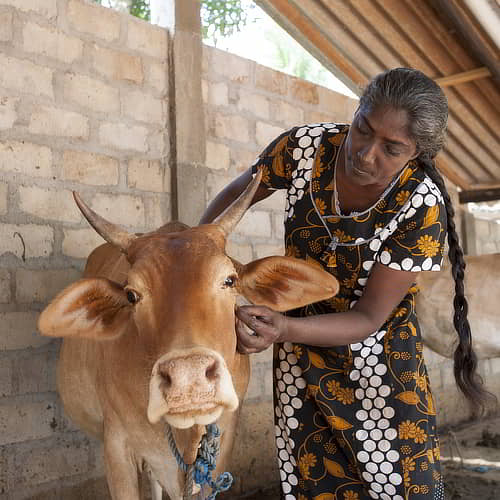
Animals – A gift of an animal can make a life-changing impact on a family. In many homes, one healthy animal can support both daily nourishment and small, steady income over time. Research indicates that livestock transfer programs can boost household welfare, with participants showing income gains.
For example, chickens can provide eggs for food or to be sold. A cow can provide milk for drinking or sale, and its dung can be used for fuel or fertilizer. GFA World provides a way for you to help provide an animal for a family in need.
A gift like this can be most helpful when it fits a family’s daily routine. A family may need time to learn care and feeding habits. They may also need a safe place for shelter at night. In some homes, children may help with simple tasks, like gathering feed. Over time, that steady rhythm can support the whole household. It can also help a family feel they have something dependable in their care.
And it can be offered in a way that protects dignity, not dependence. When families have a practical asset like this, it can reduce pressure in hard seasons and support more stable routines at home.
Income-Generating Work Supplies and Training – Needs are met when adults are taught income-generating skills. Training can also build confidence, because a skill becomes something a person can carry forward even when circumstances change. This may include literacy classes, tailoring instruction, farming classes, etc.
When a family is gifted a sewing machine or a pull cart for hauling their vegetables, a family’s income can change. Tools can help, but patient training can help even more. Studies show that asset-based approaches reflect key roles of productive assets in providing security.
A person may learn best in small steps that build over time. They may need a safe place to ask questions without fear. They may also need encouragement when progress feels slow. Sometimes, learning includes basic planning for supplies and repairs. Sometimes, it includes learning how to price work fairly.
In many communities, trusted friendships make learning feel safer. When training is respectful, a person can grow in confidence without being pushed. Even small tools can help someone take on consistent work, serve neighbors, and plan for basic needs with more stability.
Community Development – A neighborhood water well can impact an entire community. It can provide clean water access to every household, no matter their ethnicity, social class, language or religion. In some places, local community leaders help care for these shared resources, and neighbors build trust as they gather there.
Access to clean water brings measurable health benefits, potentially saving 1.4 million lives per year. Community toilets are also a great means of community development in areas of extreme poverty.
Shared resources can also create shared responsibility. A community may decide together how to keep an area clean and usable. Neighbors may take turns with simple upkeep. When people work side-by-side, it can build everyday trust. It can also help protect dignity for families who need privacy.
And it may reduce the time spent walking long distances for basic needs. When time is freed up, a parent may have more room for work, rest, or caring for children. For women and girls who often collect water, closer access saves hours daily, allowing more time for school. When basic services are closer to home, families often gain time and energy for work, learning, and caring for children.
Around the world, men and women missionaries quietly spend their days serving the poor, listening to stories of pain and walking alongside some of the people living in extreme poverty. **Among those they serve are the **poorest of the poor, families facing compounding challenges of illness, displacement, or social exclusion. Often, that looks like simple presence—showing up, listening well, and helping in practical ways that protect dignity.
That presence can look like visiting a home and listening without rushing. It can look like noticing a need and asking permission before stepping in. It can also look like helping in a way that does not draw unwanted attention. In many places, privacy is part of dignity. Steady care can help someone feel less alone in a hard season. And gentle service can make room for hope without pressure.
As they offer practical help in Jesus Christ’s name, they also share the good news that every life is precious to God. They do not offer care with strings attached. They offer it freely, with respect, and they trust God to work in each heart in His time. Their gentle presence reminds struggling families that they have not been forgotten and that God’s love can meet them in the middle of their hardest days.
This kind of service is often quiet and consistent. It may include helping a family take one small step, then another. It may include learning from local people about what is wise and safe. It may include partnering with trusted community voices, so help is not forced.
It may also include praying with someone only when they welcome it. In every case, love is shown through respect, patience, and humility.
GFA World also provides care ministries for widows, orphans and people affected by leprosy. These ministries aim to serve with dignity, patience, and long-term faithfulness. Many vulnerable populations face social stigma that compounds economic hardship.
Long-term care can mean staying present after the first crisis has passed. It can mean building trust slowly, without rushing a person’s story. It can also mean serving in ways that help a person feel valued, not defined by a hardship. When care is consistent, it can help a family feel steadier. And when care is gentle, it can reflect God’s kindness in practical ways. Learn more about these women missionaries and the meaningful impact they are having for God.
Learn more about women missionaries[1] “Poverty and Shared Prosperity 2018: Piecing Together the Poverty Puzzle.” The World Bank. www.worldbank.org/en/publication/poverty-and-shared-prosperity. 2018.
[2] Ibid.
[3] “The Chronic Poverty Report 2004-05.” Chronic Poverty Research Centre. www.chronicpoverty.org/uploads/publication_files/CPR1_ReportFull.pdf. 2019.
[4] OHCHR. “OHCHR and the Human Rights Dimension of Poverty.” Accessed December 3, 2025. https://www.ohchr.org/en/poverty.
[5] UNICEF. “Child Poverty.” Accessed December 3, 2025. https://www.unicef.org/social-policy/child-poverty.
[6] World Bank. “Poverty and Shared Prosperity 2018.” Accessed January 8, 2026. https://www.worldbank.org/en/publication/poverty-and-shared-prosperity-2018.
[7] OHCHR. “OHCHR and the Human Rights Dimension of Poverty.” Accessed January 8, 2026. https://www.ohchr.org/en/poverty.