



GFA’s Work in the 10/40 Window
The 10/40 window is a rectangular area between approximately 10 degrees and 40 degrees north latitude, covering North Africa, the Middle East and Asia.[1] This window is home to some of the world’s most remote people, and includes most of the world’s Muslims and also Asia’s traditional religions, earning the region another nickname— “The Resistant Belt.” A recent revision to the official list of countries has included several more that are close to the area rather than completely within the 10- and 40-degree latitude lines because they also have large populations who have never heard the good news of God’s love for them.

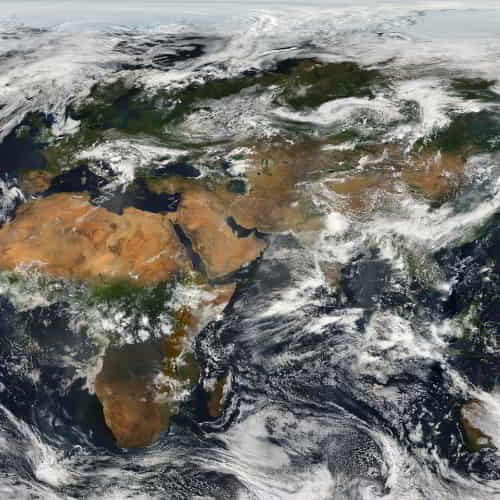
With the revised list of the 10/40 window, facts and statistics have become even more troubling. As many as 5.32 billion individuals from almost 9,000 different people groups live in the 10/40 latitudes. Over 69 percent of those groups are considered to be unaware of God’s Good News, such as the Shaikh, Yadava, Moroccan Arabs, and Burmese.[2] This means 3.28 billion people in this region have never heard the Gospel.
The need for truth is great in this window, even more so because the region is historically significant in God’s plans. Indeed, much of Scripture takes place in this global rectangle. Israel is in the middle of the window: God’s Promised Land and God’s chosen people. Biblical history shows that, even with God’s direction, the people of the region drifted away from Him from the very beginning, with Adam and Eve in Genesis 3, to the actions that led to the Flood, to the Tower of Babel, the building of which caused the people to be dispersed and eventually led to the formation of the very peoples and groups that remain in this area today.
Thus, ministering in this cradle of so many civilizations is a major goal for various organizations. There is no shortage of work in the 10/40 window. Missionaries may minister in one of the fifty least reached megacities in the world, or they could make efforts to help the poorest of the poor. Combating the teachings and beliefs of the four religious blocs that split the region is extremely challenging. Islam spreads across the top of Africa and the Middle East. Traditional Asian religions reign over South Asia as well as Southeast Asia. While China is officially an atheistic country, it too has deep traditional Asian religious roots.[3] The sheer and growing size of these populations—Asia alone holds over 35 percent of the world’s people[4]—and their devotion to traditional Asian religions makes missionary work in the region difficult but increasingly vital.
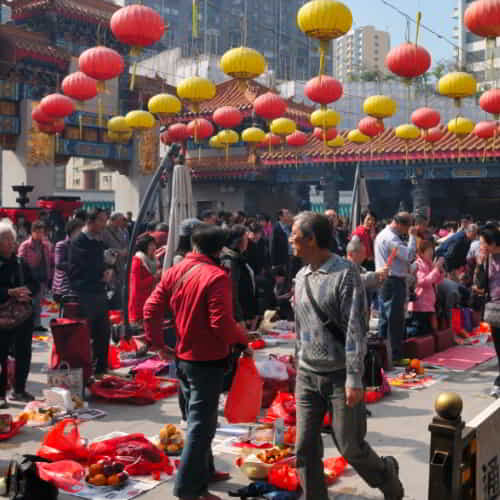

GFA World is an organization especially devoted to reaching this part of the world. Since 1979, GFA has sought to serve the “least of these” in Asia, and now in Africa as well, often in places where no one else is serving.[5] The goal is to share God’s love with those who have never heard the Gospel before, and this includes many people living within the 10/40 window.
The primary ways in which GFA accomplishes this mission is through partnering with national missionaries, children’s ministry, developing communities, and offering disaster relief and care.[6] National missionaries are from the regions where they minister, so they are uniquely positioned to know the people and the culture. This allows them more freedom than an outsider would have and means they have an intimate understanding of how to communicate the Gospel effectively.[7]
Our Child Sponsorship Program ensures children living in some of the poorest nations of the world have the vital essentials like: food, clean water, hygiene products and training, healthcare and education. Children learn how to read and write, and they especially learn that God loves them.[8]
GFA works to develop communities with gifts such as livestock that can provide continuing sources of income, with wells for fresh water access and with hygienic toilets. Income generated by animals and things like sewing machines help to lift families and communities out of poverty, while clean water improves health and the ability to work, all showing lost people how much God cares.[9] When disastrous floods or earthquakes strike, GFA World is on the ground, helping to rescue people, caring for survivors and showing them God’s loving-kindness. GFA’s emergency supplies, counseling and help to rebuild all point people to their Creator.[10]


All GFA’s ministries are especially vital among the 10/40 window nations, which are in desperate need of the Gospel. GFA already ministers in over twenty countries, including Bangladesh, Sri Lanka, and Nepal;[11] all three appear on the revised list of those nations within the window who have yet to hear of Jesus.[12] As GFA continues expanding ministry into Africa, our impact within the 10/40 latitudes will grow.

If GFA’s work in this region interests you, consider partnering with us. It only takes $30 a month to help sponsor a national missionary.[13] Sponsoring a child is a mere $35 monthly.[14] Even if a monthly payment is not possible, a single donation of any amount can help GFA provide food, care or relief to a person in desperate need of God’s love. There is still so much to do to minister to the unvisited people of the 10/40 window, and GFA relies on Christians all over the world to make our ministries possible.
Learn more about effects of poverty on child development[1] “What Is the 10/40 Window?” Joshua Project. Accessed June 15, 2023. https://joshuaproject.net/resources/articles/10_40_window.
[2] “What Is the 10/40 Window?” Joshua Project. Accessed June 15, 2023. https://joshuaproject.net/resources/articles/10_40_window.
[3] “What Is the 10/40 Window?” Joshua Project. Accessed June 15, 2023. https://joshuaproject.net/resources/articles/10_40_window.
[4] Asia Population (live). Worldometer. Accessed June 15, 2023. https://www.worldometers.info/world-population/asia-population/.
[5] “About Us.” GFA World. Accessed June 15, 2023. https://www.gfa.org/about/.
[6] “About Us.” GFA World. Accessed June 15, 2023. https://www.gfa.org/about/.
[7] “National Missionaries.” GFA World. Accessed June 15, 2023. https://www.gfa.org/sponsor/.
[8] “Sponsor a Child with GFA World.” GFA World. Accessed June 15, 2023. https://www.gfa.org/sponsorachild/.
[9] “Community Development.” GFA World. Accessed June 15, 2023. https://www.gfa.org/ministries/community-development/.
[10] “Disaster Relief Work.” GFA World. Accessed June 15, 2023. https://www.gfa.org/compassion-services/disaster-flood-relief/.
[11] “Where We Work.” GFA World. Accessed June 15, 2023. https://www.gfa.org/regions/.
[12] “What Is the 10/40 Window?” Joshua Project. Accessed June 15, 2023. https://joshuaproject.net/resources/articles/10_40_window.
[13] “National Missionaries.” GFA World. Accessed June 15, 2023. https://www.gfa.org/sponsor/.
[14] “Sponsor a Child with GFA World.” GFA World. Accessed June 15, 2023. https://www.gfa.org/sponsorachild/.