



What Are Some 10/40 Window Facts?
The 10/40 window facts, and statistics reveal deep need for missions in the region. There are as many as 8,882 distinct people groups who call the window home, and as many as 6,147 of those groups are considered uncontacted.[1] The Shaikh, for instance, are a socio-cultural group that originated with Arab settlers in South Asia and now includes many subgroups, numbering over 134 million members in total.

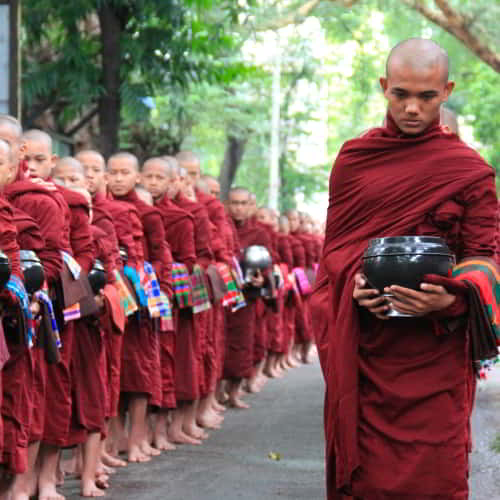
The Shaikh are basically 100 percent Muslim, with almost no evangelistic progress.[2] Another group is the Burmese. Originally from the hills of Tibet in Western China, they moved into Myanmar, formerly Burma, and now have over 31 million people. Only 0.35 percent of that population is considered Christian; nearly 95 percent practice Buddhism.[3]
The Shaikh of Bangladesh and the Burmese of Myanmar are just two examples of the many people groups who desperately need the Gospel. Indeed, about 97 percent of the world’s unaccessed populations live in the 10/40 window, and the darkest place of all in that window might just be Asia. Over 80,000 people die each day in Asia without knowing Christ, and even with such sobering statistics, less than 0.05 percent of the Western Church’s resources go toward work in the region.[4]
This is why GFA World has always emphasized reaching Asian countries, and now Africa as well. GFA founder K.P. Yohannan (Metropolitan Yohan) knows firsthand the power of Christ moving in the area. He was born in South Asia in 1950, and he started his missions work at just sixteen, sharing the Gospel with villages north of where he grew up. After years of working in both missions and pastoral ministry, Yohannan founded GFA in July 1979, pioneering a program to support national missionaries by encouraging sponsors to set aside a dollar a day to sponsor a national missionary. That program continues today, along with our other efforts like the Child Sponsorship Program, which has helped thousands of children escape the generational cycle of poverty,[5] and disaster relief, which provides aid and support to stricken communities.[6]
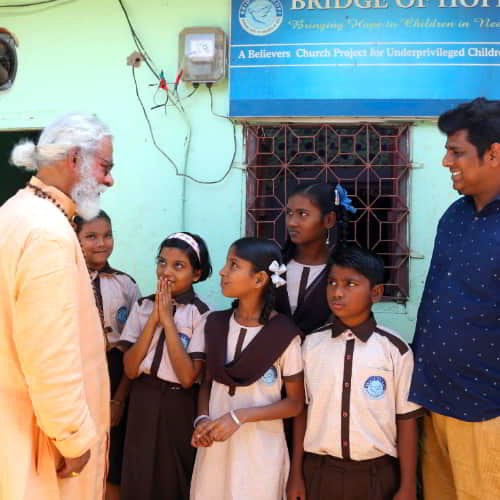

GFA’s efforts within the 10/40 latitudes are making a much-needed impact on many of these countries and groups. You can join in this effort of bringing hope by sponsoring a national missionary or a child. Our ministries rely on prayer and donations to thrive, and it just takes around a dollar a day to make a huge difference in someone’s life.
Learn more about the 10/40 window[1] “What Is the 10/40 Window?” Joshua Project. Accessed June 15, 2023. https://joshuaproject.net/resources/articles/10_40_window.
[2] “Bengali Muslim Shaikh in Bangladesh.” Joshua Project. Accessed June 15, 2023. https://joshuaproject.net/people_groups/18084/BG.
[3] “Burmese in Myanmar (Burma).” Joshua Project. Accessed June 15, 2023. https://joshuaproject.net/people_groups/11029/BM.
[4] “About National Missionaries.” GFA World. Accessed June 15, 2023. https://www.gfa.org/about/the-missionaries/.
[5] “About KP Yohannan.” GFA World. Accessed June 15, 2023. https://www.gfa.org/about/kpyohannan/.
[6] “Disaster Relief Work.” GFA World (Gospel for Asia). Accessed July 31, 2023. https://www.gfa.org/compassion-services/disaster-flood-relief/.