Why Should I Sponsor a Goat for a Family?
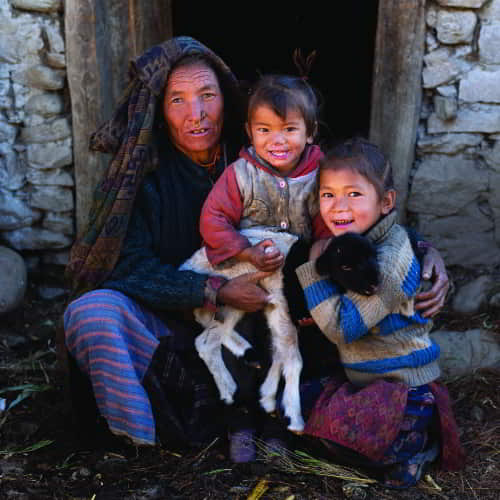
To sponsor a goat for a family is to help them begin a new life. Goats gestate for only 5 months. The first birth will be one or two goats, but subsequent births will often be two to even four kids. This means that what started as a gift of two goats can become a goat farm in a year, producing milk and cheese for consumption or producing income.
Beyond the rapid multiplication of herds, goat milk provides exceptional nutritional value for growing children. The protein in goat milk appears more digestible than that in cow milk, according to WebMD, meaning young bodies can use it more efficiently.
When goat milk reaches the stomach, it forms softer curds than cow milk—approximately 2% compared to 10%. This gentler curd formation reduces digestive irritation and speeds nutrient absorption.
The nutritional advantages extend beyond protein. Goat milk contains higher levels of certain vitamins and minerals than alternative dairy sources, supporting the health of children who may lack access to varied diets.
Why Goats Transform Lives in Poverty
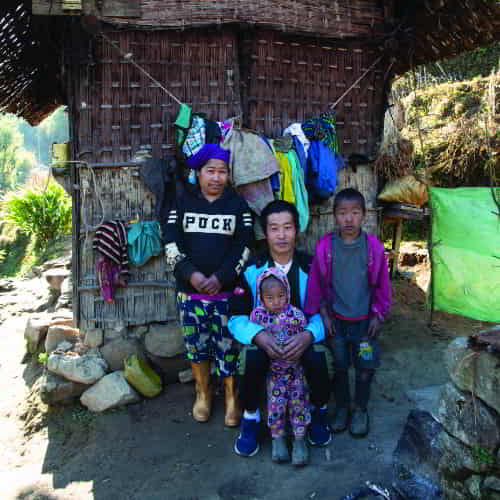
So, imagine a family of four or more in dire poverty. The parents have no education, meaning they can only get manual labor jobs, such as working in fields or making bricks. These menial and low-paying jobs do nothing to help a family move past poverty, no matter how hard they work. The parents have no shortage of work ethic or desire to provide for their family, but the opportunities are just not there.
These families face an economic trap. Manual labor generates subsistence income at best. Without education or capital, advancement remains nearly impossible regardless of effort.
Proven Income Generation
Research across multiple countries reveals a consistent pattern. Over 59% of smallholder farmers who raise goats cite income generation as their primary motivation, per a 2025 study published in Ethiopia. When a family received goats through development programs, their financial stability improved measurably within twelve months.
For children in these households, the impact proves particularly significant. Families report using goat-related income to cover school fees, purchase medicine, and provide better nutrition—expenses previously unaffordable on manual labor wages alone.
Easier Digestion for Growing Children
The digestibility of goat milk offers practical benefits for families raising young children. Goat milk is easier to digest than cow’s milk due to smaller fat globules and a different protein structure, research from St Helen’s Farm confirms.[1]
The casein protein in goat milk predominantly contains A2 beta-casein, which studies have linked to fewer digestive issues compared to the A1 proteins commonly found in conventional cow milk. This biochemical difference translates to real comfort for children whose systems struggle with traditional dairy.
Parents in rural communities particularly value this characteristic. When a child can digest milk without discomfort, the family gains both nutrition and peace of mind. The milk nourishes without causing the stomach troubles that sometimes accompany other dairy products.
How GFA World Creates Sustainable Change
This is where GFA World missionaries love to come to their assistance and provide the means for more, all in the name of Christ. We have learned what types of farm animals and other items are most beneficial to those struggling in poverty. Our Christmas Gift Catalog is full of ideas for you and your family to dream about gifting to a family across the world.
The catalog presents a range of donation amounts designed to accommodate various giving capacities. Whether your family can contribute toward a pair of goats or multiple animals, every gift creates lasting change for families in Africa and Asia.
Through decades of experience serving vulnerable communities, GFA World has identified which animals provide the most sustainable benefit. Goats consistently rank among the top choices because they adapt well to diverse climates, reproduce reliably, and require modest resources compared to larger livestock.
The Economics of Goat Farming
The economic model behind goat farming makes it exceptionally well-suited for income generation. Goats reproduce year-round in tropical zones, providing families with a continuous source of potential income, Farm Africa’s research demonstrates. As herds grow, families can sell extra milk, cheese, butter, meat, and hides for steady cash.
One doe can produce sufficient milk daily to nourish a family while leaving surplus for market sale. Smallholder farmers consistently report using this income stream to fund school fees, cover medical expenses, and purchase essentials that manual labor wages could never accommodate.
The transformation extends beyond individual households. When multiple families in a community raise goats successfully, local markets for dairy products emerge. What begins as household food security evolves into micro-economies that lift entire villages.
Training for Long-Term Success
Training complements the gift of goats. Families learn proper animal husbandry, disease prevention, and basic veterinary care, as documented in UN Development Programme reports from Zambia. This knowledge transfer ensures that herds remain healthy and productive for years.
Your Gift Multiplies Across Generations
With these gifts, families have been able to start goat farms, chicken farms and more. The animals are gifts that continue to give far beyond their own lives. Review our Christmas Gift Catalog and dream about the change you can help bring about in a family’s life. Get excited together as a family thinking about the joy such an unexpected gift would bring to their lives.
Generous donors throughout the United States and many other nations have partnered with GFA World to provide livestock gifts that multiply across generations. The initial gift of two goats can become a thriving herd within three years, enabling families to share offspring with neighbors and extend the blessing throughout their communities.
The ripple effects continue expanding. Children attend school because goat sales fund their fees. Families access healthcare because they possess a liquid asset they can convert to cash when medical needs arise. Communities develop resilience because multiple households share knowledge and resources.
Stay Connected to Your Impact
When you contribute, you can receive email updates connecting you to the ongoing impact of your generosity. These communications show how specific gifts—like goats—transform lives in particular regions, providing tangible evidence of the difference your support makes for families working to escape poverty’s grip.
Many donors describe these updates as among the most meaningful aspects of their giving. Seeing photographs of families with their thriving goat herds, reading testimonies of children now attending school, and learning about communities gaining economic stability—these stories transform abstract charity into concrete relationship.
From Charity to Relationship
The joy of giving extends beyond the initial transaction. Contributing to a sustainable solution rather than temporary relief brings lasting satisfaction. You provide not just animals but opportunity—not just food but future.
Stories from communities receiving goats illustrate the profound changes that unfold. Mothers who once worried constantly about feeding their children now possess reliable income sources. Fathers who labored endlessly without advancing their family’s situation now build assets that appreciate over time through natural herd growth.
These testimonies reveal a common theme. The gift addresses not merely immediate hunger but the underlying economic vulnerability that perpetuates poverty across generations. When families gain productive assets and knowledge to manage them, they escape cycles of dependence and begin charting their own paths forward.
Learn more about how to sponsor a family for Christmas![1] Prosser, C. G., Franz, P., & Carpenter, E. A. “The composition of goat milk curd during gastric digestion differs from that of cow milk.” International Dairy Journal. 2008. https://www.sciencedirect.com/science/article/abs/pii/S0958694607002312. Accessed April 6, 2026.