What Is the 10/40 Window

What Are Some 10/40 Window Statistics?

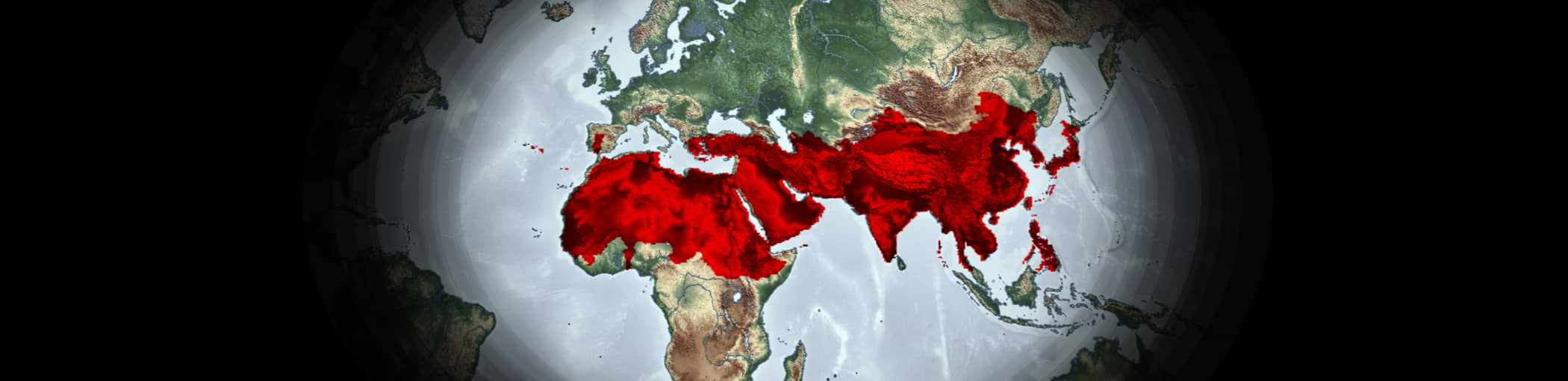
Several organizations collect and study 10/40 window statistics. Their findings help missions organizations develop effective ministries to help the people of the area. Understanding these numbers reveals the depth of physical and spiritual need across this vast region. It stretches from North Africa through the Middle East and deep into Asia. The entire area lies north of the equator, between 10 and 40 degrees north latitude.

Here are some statistics of this region:


  • There are 5.32 billion people who live in the revised 10/40 window.[1]
  • There are 8,882 distinct people groups in the revised window. Of those, 6,147 or 69.2% are considered uncontacted (3.28 billion people).[2]
  • Some of the largest people groups in the world live inside the 10/40 window, including Shaikh, Yadava, Turks, Moroccan Arabs, Pashtun, Jat and Burmese.[3]
  • Windows International estimates that 1.6 billion of these people have never had the chance to hear about the love of Jesus Christ.[4]
  • The 10/40 window is also home to some of the poorest people in the world. This has caused ministries and humanitarian organizations to pour help into this region. It is reported that 87% of people living in this region are the poorest of the poor, living on an average of only $250 per family annually.[5]
  • Each of these figures carries real weight. Behind every statistic is a community of people — men, women, and children who are known and loved by God. Together, these numbers help missions organizations and humanitarian groups understand where to focus their efforts and how to serve most effectively.

Understanding the Scale of Need


The 10/40 window holds nearly two-thirds of the total world population. It covers only about one-third of the earth’s land area. That concentration of humanity is unlike anything found anywhere else on the globe. According to Joshua Project, approximately 96% of the world’s unreached people groups live within its boundaries. These are communities with little or no access to the message of Jesus Christ.

A billion and a half people have no opportunity to hear the Good News. Billions more live without adequate food, clean water, or education. The numbers are striking, but each one represents a family, a child, a person God loves deeply.

The region’s spiritual landscape is complex. Islam prevails across much of africa the middle east. Traditional Asian religions — including Hinduism and Buddhism — dominate large portions of South and East Asia. Research published by Pray1040 notes that the window contains the world’s largest populations of Muslims, Hindus, and Buddhists. Faith shapes every dimension of daily life for billions of people inside this region.

This depth of religious diversity is one reason researchers once called the resistant belt. The term reflected a geographic concentration of non-Christian populations. It also pointed to cultural and social barriers that made ministry particularly difficult. Those barriers remain real today — but so does God’s love for every person within them.

Poverty and the 10/40 Window


Few statistics capture the human cost of the 10/40 window’s challenges more directly than its poverty rates. The majority of the world’s poorest people are concentrated here. Joshua Project reports that more than eight out of ten of the world’s “poorest of the poor” live inside the 10/40 window. Many survive on only a few hundred dollars per person per year.

That poverty is not accidental. It intersects with limited access to education, inadequate healthcare, and in many places, significant political instability. Research from Pray1040 highlights that many of the window’s most populous countries rank among the lowest on global development indicators. This pattern persists across both southeast asia and parts of sub-Saharan Africa. Many of these same communities also have limited access to Scripture in their heart languages — a barrier that compounds isolation and limits the reach of transformational ministry.[6]

The overlap between poverty and lack of gospel access is striking. Communities with the fewest resources are often also the communities with the least exposure to the hope God’s love brings. This is precisely why GFA World’s approach — meeting physical need alongside spiritual need — is so well-suited to the 10/40 window.

Persecution and the World Watch List


For many people inside the 10/40 window, following Jesus carries genuine risk. The annual world watch list, published by Open Doors, tracks the countries where followers of Jesus face the greatest hardship. Year after year, the overwhelming majority of those countries fall within or near the 10/40 window. Nations across North Africa, the Middle East, and Central Asia consistently appear near the top of the rankings.

Open Doors reported in 2024 that more than 365 million Christians worldwide face high levels of difficulty for their faith. That is roughly one in every seven believers globally. The weight of that hardship falls heaviest inside the 10/40 window. There, isolation, government restriction, and social pressure often combine to make faith costly.[7]

GFA World’s national workers carry on faithfully in this environment. They serve communities with compassion, bringing practical help to struggling families. Their deep understanding of local culture and language makes them uniquely effective. They are able to minister in places where outside workers could not easily go.

People Groups and the Scope of the Task


The 10/40 window’s 8,882 people groups represent extraordinary cultural and linguistic diversity. A people group is a community that shares a common language, ethnicity, and cultural identity. Missionary strategist luis bush helped bring global attention to this reality. His research in the late 1980s pointed clearly to this geographic band as the greatest concentration of unreached communities on earth.

Within this band, some people groups number in the tens of millions. Others are small communities living in remote mountain regions or dense urban centers. What many share is a lack of Scripture in their heart language. They also have a shortage of local workers able to serve them. Crossworld notes that only about 3.4% of missionaries worldwide currently serve among unreached peoples. That means the most underserved communities receive the fewest workers.

The total population lives within the 10/40 window — nearly five and a half billion people. This represents the greatest single concentration of human need on earth. For GFA World, that concentration of need is also a concentration of opportunity. It is an invitation to serve, to love, and to bring lasting transformation to communities that have long waited.

GFA’s Response to What the Statistics Reveal


Statistics about the 10/40 window do not tell the whole story. They describe need — but they do not capture resilience, culture, beauty, or the profound dignity of every person God created. GFA World’s national workers understand this. They enter each community not as outsiders assessing a problem, but as neighbors and servants sharing God’s love.

Practical transformation takes many forms. A family receives a cow or a pair of chickens, and suddenly has a source of income. A child is sponsored, stays in school, and gains tools to break the cycle of poverty. A Jesus Well is drilled, and a village gains clean water for the first time. According to GFA’s poverty report, these gifts address root causes of suffering — not just its symptoms.[8]

GFA World also works in Africa, where need is great and communities are hungry for hope. The ministry’s commitment spans both continents — bringing practical care and transforming relationships wherever God opens doors.

The scale of the task can feel overwhelming when viewed through statistics alone. But God does not see statistics. He sees people — individuals, families, communities — each one deeply known and loved. GFA World carries that same perspective into every ministry it undertakes, whether in a remote village in South Asia or an urban neighborhood across Africa.

This is what makes national missionaries so vital. They are people who already know the language, share the culture, and understand the daily realities of the communities they serve. They bring not only practical resources, but also relationships built over years. They are trusted neighbors carrying a message of hope — and that trust opens doors that statistics cannot measure.

How do statistics like these impact the ministry of GFA World inside the 10/40 window?


GFA is transforming communities through Christ’s love in four main ways:

  • Sponsoring and supporting national missionaries, who serve as the hands and feet of Christ as they minister to people’s physical and spiritual needs;
  • Sponsoring children to meet both their and their families’ needs in a variety of ways, including by providing education;
  • Investing in community development so entire neighborhoods receive assistance like clean water, sanitation, etc., and
  • Helping families in need of care or those impacted by disasters such as earthquakes, floods, fires and more.

Each of these four areas addresses a specific dimension of the need that the statistics reveal. National missionaries bring the Good News to communities that have never heard it. Child sponsorship breaks the cycle of poverty for the next generation. Community development provides clean water and sanitation that protect families from disease. Disaster relief reaches people in their most vulnerable moments.

Through these ministries, people in this region find hope outside of their difficult circumstances.
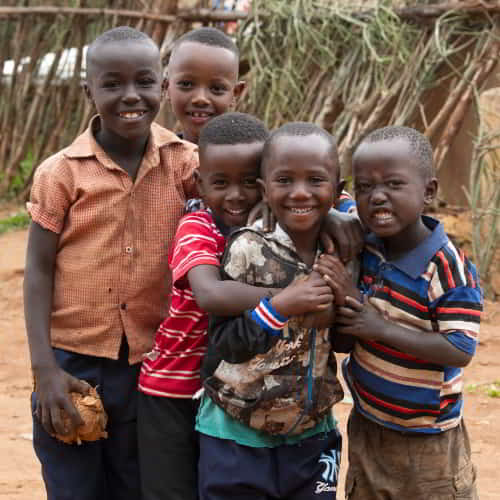
GFA works in over 20 countries worldwide, focusing on serving those who have never once heard the Good News—especially those in the 10/40 window.

For over 35 years now, GFA has helped launch national workers in some of the neediest Asian countries, including areas with the most inaccessible people groups in the world.

The experience GFA’s national workers carry is deep and hard-won. They minister in communities where social and spiritual barriers to change are formidable. The transformation they witness — families receiving clean water, children staying in school — speaks powerfully to what faithful service can accomplish. Decade after decade, lives are restored and futures are changed.[9]

We continue to be faithful in this region, as well as in Africa, to provide tangible help to those in need and to bring the Good News to people who have yet to learn about God’s love for them. It is our desire to minister to them and help them through ministries like education, health and practical gifts, or through the spiritual transformation of peaceful hearts, restored relationships and mended lives. We do this all in community and in partnership with the global Body of Christ.

Learn more about what is the 10/40 window

[1] “What is the 10/40 window?” Joshua Project. Accessed June 23, 2023. https://joshuaproject.net/resources/articles/10_40_window.
[2] Ibid.
[3] Ibid.
[4] “The 10/40 Window.” Windows International Network. Accessed June 23, 2023. https://www.win1040.org/about-the-1040-window.
[5] Ibid.
[6] “10/40 Window.” Pray1040. Accessed February 2026. https://pray1040.com/10-40-window/.
[7] “World Watch List 2026.” Open Doors. Accessed February 2026. https://www.opendoors.org/en-US/persecution/countries/.
[8] “Poverty: Public Enemy #1.” GFA Special Report. October 17, 2019. https://www.gfa.org/special-report/poverty-alleviation.
[9] “Where We Work.” GFA World. Accessed June 23, 2023. https://www.gfa.org/regions.