What Is the 10/40 Window

What Is the 10/40 Window?

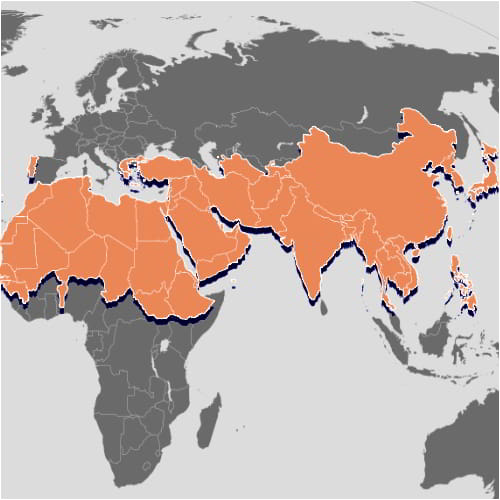
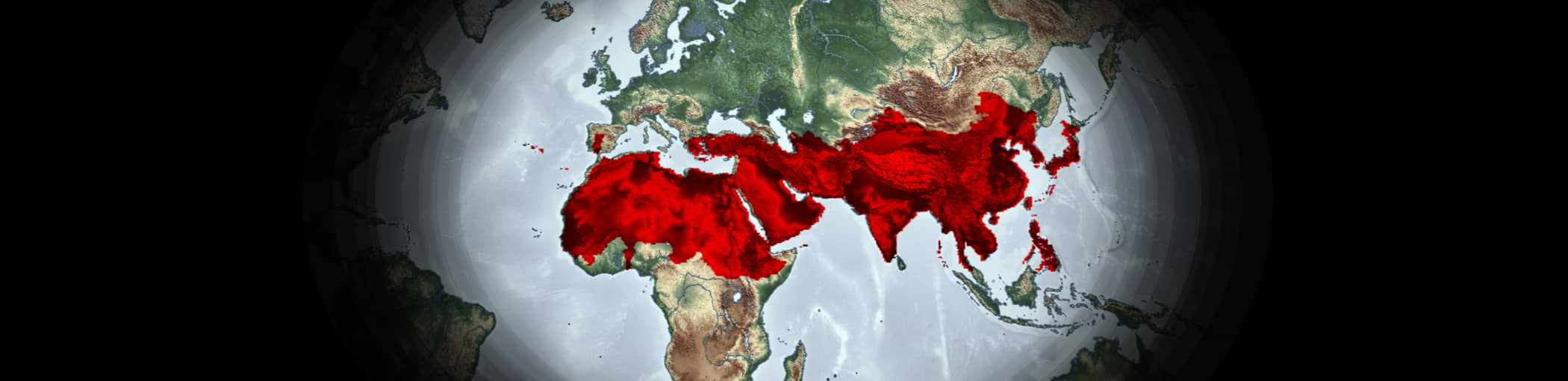
When answering, “What is the 10/40 window?” the most basic definition according to Ends of the Earth Ministries is “a rectangular area of North Africa, the Middle East and Asia, between 10 degrees north and 40 degrees north latitude.”[1] This geographic designation represents one of the most strategic regions for humanitarian and faith-based work in the modern era. The window stretches from West Africa across to East Asia, creating a band that encompasses vast cultural diversity. This region contains some of the world’s most ancient civilizations and trade routes, according to geographic research.

It is important to also remember that this window represents more than a designation on the map. It is home to the beautiful people of this region of the world, many of whom are Muslims and followers of traditional Asian religions.[2] This area is said to be the most closed to the Christian message. Research indicates that approximately 3.45 billion individuals live in this region across thousands of distinct communities. The window is home to people speaking hundreds of languages and maintaining countless unique cultural traditions. These communities face significant barriers to accessing resources that many in other parts of the world take for granted.

What is the 10/40 window? The history is interesting: In 1989 and 1990, Luis Bush and Pete Holzmann analyzed the region using a box located between 10 and 40 degrees north of the equator. They called it the 10/40 box. Bush, serving as a christian missionary** strategist, recognized that this area contained the highest concentration of unreached people groups in the world. Bush presented his findings at international conferences, highlighting three critical factors. First, the region contained the world’s poorest communities, according to economic data from that era. Second, it included the majority of people following non-Christian religions. Third, access to basic resources and services remained severely limited across much of the territory.

Later, Bush’s wife renamed the box “the 10/40 window” because a window represents an opportunity to see important mission realities more clearly.[3] The “window” metaphor suggested both a view into needs and an opening for help to reach communities. Prior to Bush and Holzmann’s research, the region was known as the “resistant belt” or the “unoccupied fields.”[4] The term called the resistant belt emerged because many governments in this area officially opposed outreach work, according to historical research. Samuel Zwemer, writing in 1911, first used “unoccupied fields” to describe areas where organized help had not yet established a presence.

The 10/40 window has expanded over the years. Originally, the window comprised only countries with at least 50% of their landmass inside of the window. The revised window includes several countries that are close to the 10 or 40 degrees north latitude. These countries in the 10/40 window that were added have high concentrations of people yet to be reached with the Gospel of Jesus Christ. The expansion reflects growing understanding of where communities most need access to resources and hope.

When studying the 10/40 window statistics, we can learn a lot about the region. “Approximately 5.32 billion individuals residing in 8,882 distinct people groups are in the revised 10/40 Window.”[5] The current window includes 68 countries. This means that roughly two-thirds of the world’s population live in this rectangular area, representing an extraordinary concentration of humanity. Research from The Traveling Team notes that 6,013 unreached people groups totaling 3.28 billion people reside within these boundaries.

What is the 10/40 window? Inside this window, we find three of the world’s dominant religions—Islam and two traditional Asian religions. Islam prevails in the Middle East and northern Africa, while traditional Asian religions are prevalent in South Asia and near the center of the window. The window includes the majority of the world’s Muslims, Hindus, and followers of other Asian faiths. There are also large populations of Atheists and non-religious people inside the window.

The 10/40 window is also home to the majority of the world’s poor. “Of the poorest of the poor, more than eight out of ten live in the 10/40 Window. On average, they exist on less than a few hundred dollars per person per year,” says the Joshua Project.[6] This poverty creates daily struggles for families who lack access to clean water, adequate nutrition, and basic healthcare. Research from humanitarian organizations indicates that many communities face multiple layers of hardship simultaneously. Families often must choose between food and medicine, or between school fees and shelter repairs. The cycle of poverty proves difficult to break without external intervention and support. Children in these regions face particular vulnerabilities, including malnutrition and limited educational opportunities, according to development studies.
Understanding the Great Commission Context


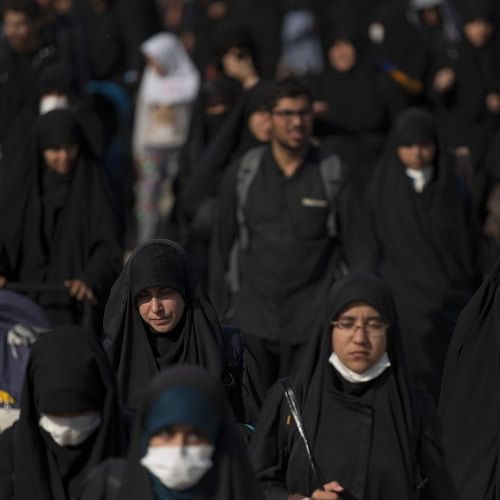
The work in the 10/40 window connects directly to what many call the great commission—the instruction to share hope with all peoples. According to biblical scholars, this commission calls believers to active involvement in serving communities worldwide. For GFA World, this means demonstrating God’s love through tangible help and compassionate service rather than aggressive outreach. The focus remains on meeting genuine needs and allowing transformed lives to speak for themselves.

The approach emphasizes cultural sensitivity and respect for local traditions. National workers live among the people they serve, sharing meals and daily life with their neighbors. When communities see genuine love demonstrated through action, hearts naturally open to deeper conversations. The work proceeds with patience and wisdom, never forcing conversations but remaining ready to share hope when opportunities arise naturally.

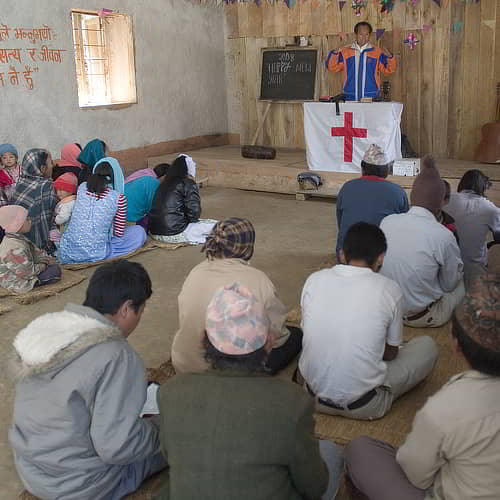
GFA World is committed to bringing physical and spiritual help to several countries in the 10/40 window. Through local churches and missionaries, GFA is transforming communities through the love of Jesus Christ.

Much of this help comes through national missionaries serving their communities and cultures. These missionaries understand the culture and know the language, and they have a passion and burden to reach their own communities with the Good News of Jesus Christ. These characteristics create a serious advantage for a national missionary over a missionary coming in from another part of the world. National workers navigate cultural nuances that outside workers might miss, according to missions research. They already speak the local dialects and understand community dynamics. They comprehend unspoken social rules, know which gestures show respect, and understand family structures that shape decision-making.

These workers also face fewer barriers to entry than foreigners would encounter. Many countries in the 10/40 window restrict outside workers or make obtaining necessary permissions extremely difficult. National workers can move freely within their own countries, establishing connections without suspicion. They understand seasonal rhythms of agricultural communities and can time their visits appropriately. Their presence doesn’t attract unwanted attention from authorities concerned about foreign influence, according to field workers’ testimonies. This natural integration allows them to build deep, lasting relationships that transcend surface-level interactions.

GFA World is active in much of the 10/40 window: Bangladesh, Nepal, Cambodia, Laos, Thailand and other countries.[7] Work in Africa and Asia demonstrates God’s heart for all peoples, regardless of geography or circumstance. Each nation presents unique challenges and opportunities for serving communities in need.

Bangladesh faces regular flooding that destroys homes and crops, leaving families vulnerable. Workers there provide disaster relief alongside long-term development programs. Nepal’s mountainous terrain isolates many villages, making access to services extremely difficult. Teams trek for days to reach remote communities with supplies and support. In Cambodia, families still recover from decades of conflict that devastated infrastructure and social systems, according to regional reports. Each context requires tailored approaches that respect local needs while addressing underlying causes of poverty.

Challenges Facing 10/40 Window Communities

The region faces interconnected challenges that compound poverty and suffering. Geographic barriers like mountains, deserts, and islands isolate many communities from markets and services. Climate patterns bring both drought and flooding, destroying crops and displacing families. Limited infrastructure means many villages lack roads, electricity, or clean water systems.

Health challenges proliferate in areas without adequate medical facilities. Preventable diseases claim lives that basic healthcare could save. Malnutrition weakens children, limiting their ability to learn and grow. These health barriers perpetuate poverty by reducing families’ productive capacity.

How does GFA help meet the needs of the people who reside in the 10/40 window? There are many ways, but here are two of the primary ones:


Through life-changing gifts

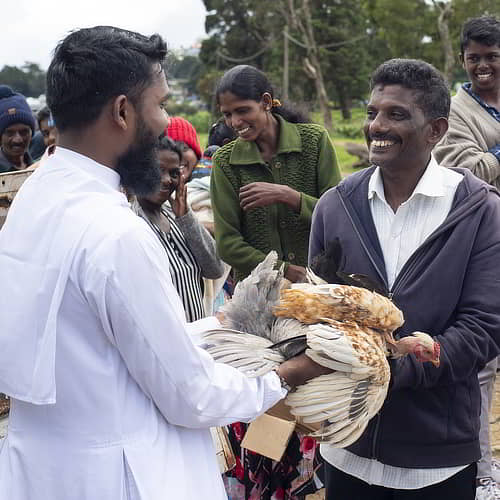
— When families in poverty are gifted with a cow, a pair of chickens or other livestock, their quality of life can change drastically. Such a gift can lift them out of poverty. For example, chicken eggs can be sold at the market, used to feed their family or hatched to provide ongoing income. GFA supporters have been providing these life-changing gifts to families in the 10/40 window for over a decade.[8] Research on poverty alleviation programs shows that income-generating assets can increase family earnings by significant margins. These simple gifts create ripple effects throughout entire communities.
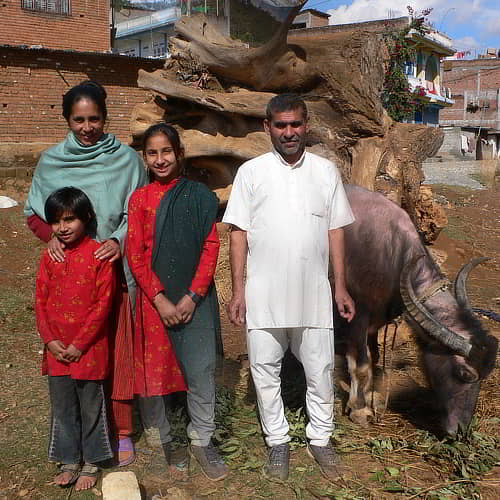
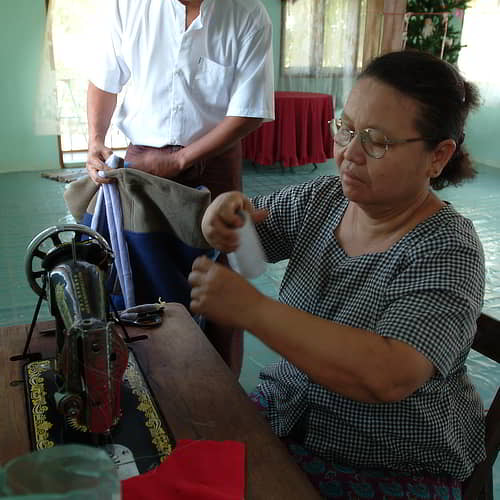
A single goat can provide milk for children while also breeding to create additional income streams. Families sell surplus milk at local markets, using profits to purchase food or school supplies. When the goat reproduces, families often gift offspring to neighbors, multiplying the blessing throughout their village. A water buffalo helps plow fields more efficiently, allowing families to cultivate larger areas and increase crop yields. Sewing machines enable women to start tailoring businesses from their homes, according to impact reports. These assets don’t just address immediate needs—they create sustainable pathways out of poverty that last for generations.

Through education

— This is a big factor in breaking the cycle of poverty. Education and new skills create healthy ways to provide for a family. GFA’s Child Sponsorship Program provides ways for kids to stay in school and also offers training for their parents. Through these training classes―in literacy, sewing, welding, farming and so on―parents are equipped with new skills and new ways to provide for their family’s needs. Studies indicate that education remains crucial for long-term economic stability in developing regions.

Literacy training opens doors that were previously closed to adults who never learned to read. Vocational programs teach marketable skills that communities actually need. Welding students learn to repair farm equipment, creating businesses that serve agricultural communities. Sewing class graduates produce clothing for local markets. These practical skills lead to employment opportunities that can support entire families.

Children who stay in school through sponsorship programs often become the first in their families to complete their education. Some go on to higher education, becoming teachers, nurses, or community leaders who uplift entire villages.

These are just two ways GFA makes a big impact in the world of poverty, but perhaps the most beneficial is the care and love of the local missionaries who bring the Good News of Jesus to a hurting world. These faithful workers demonstrate Christ’s compassion daily through both words and actions.

The needs are plentiful in the 10/40 window, but the solutions are often very simple. Will you be part of the solution? It may be as simple as providing a life-changing gift to a needy family. Your partnership can help transform lives across Africa and Asia, bringing hope where it’s needed most.

Learn more about the 10/40 window map

[1] “What Is the 10/40 Window?” Ends of the Earth Ministries. Accessed July 27, 2023. https://eote.org/1040window/.
[2] “What is the 10/40 window?” Joshua Project. Accessed June 23, 2023. https://joshuaproject.net/resources/articles/10_40_window.
[3] “What Is the 10/40 Window and Why Is It Important?” Advancing Native Missions. October 30, 2019. https://advancingnativemissions.com/what-is-the-10-40-window-and-why-is-it-important/.
[4] Zwemer, Samuel M. “The Unoccupied Mission Fields of Africa and Asia. New York: Student Volunteer Movement for Foreign Missions, page 259. https://missiology.org.uk/pdf/e-books/zwemer/unoccupied-mission-fields_zwemer.pdf.
[5] “What is the 10/40 window?” Joshua Project. Accessed June 23, 2023. https://joshuaproject.net/resources/articles/10_40_window.
[6] Ibid.
[7] “Where We Work.” GFA World. Accessed June 23, 2023. https://www.gfa.org/regions.
[8] “Poverty: Public Enemy #1.” GFA Special Report. October 17, 2019. https://www.gfa.org/special-report/poverty-alleviation.