Can You Provide a List of the Countries in the 10/40 Window?
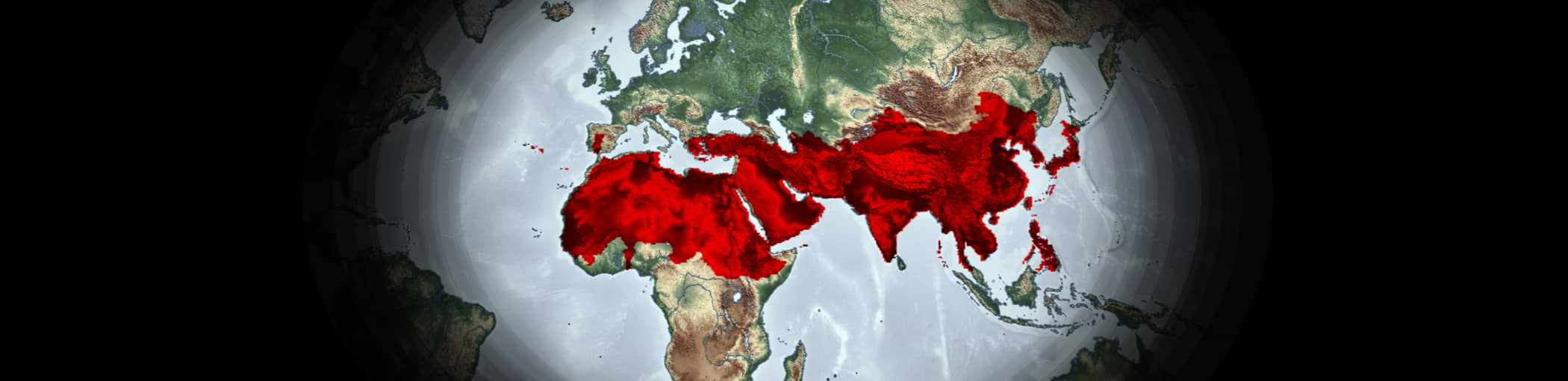
The 10/40 Window stretches from 10 degrees to 40 degrees north of the equator. This rectangular region extends from West Africa the Middle East, across Asia, covering approximately 69 nations today. The name comes from these latitude lines, defining where billions of people live in the 10/40 Window with limited access to the Gospel.
The concept was first introduced in 1990 by missionary strategist Luis Bush as a geographic frame showing where unreached people groups concentrate most densely. Bush called this region a “window of opportunity” rather than simply viewing it as resistant territory. The original list has evolved over time. The revised 10/40 Window removes Christianized nations like South Korea and the Philippines while adding countries like Indonesia that sit close to these latitude boundaries and contain high concentrations of people who have never heard of Jesus Christ.
Here are most of the countries in the 10/40 window as designated by Window International Network:[1]
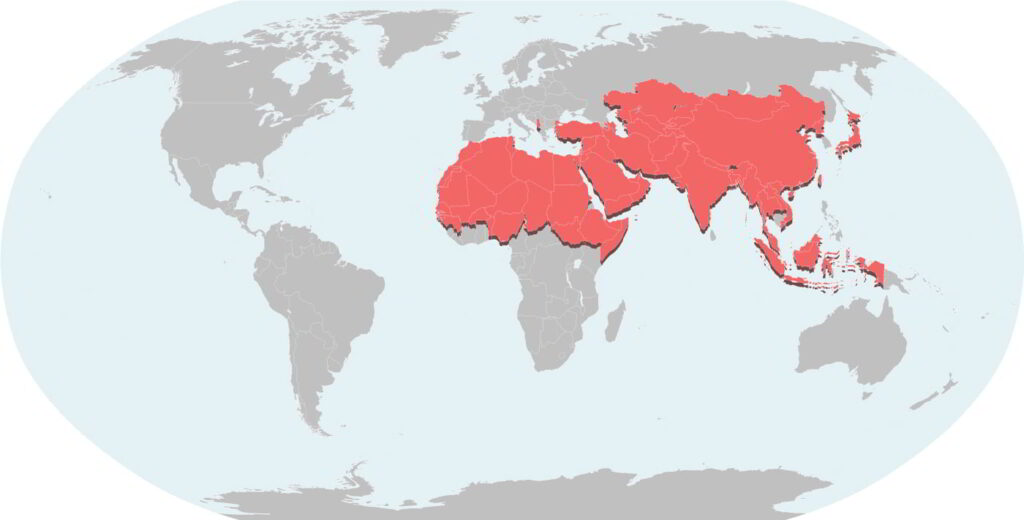
- North Africa – Algeria, Egypt, Libya, Morocco, South Sudan, Sudan, Tunisia, Western Sahara
- West Africa –Burkina-Faso, Guinea, Guinea-Bissau, Mali, Niger, Nigeria, Senegal,
- East Africa – Chad, Djibouti, Eritrea, Ethiopia, Somalia
- Southeast Europe – Albania
- Arabian Peninsula – Kuwait, Oman, Qatar, Saudi Arabia, United Arab Emirates, Yemen
- Middle East – Gaza Strip, Iran, Iraq, Israel, Jordan, Lebanon, Syria, Turkey, West Bank
- Central Asia – Azerbaijan, Kazakhstan, Kyrgyzstan, Tajikistan, Turkmenistan, Uzbekistan
- East Asia – China, Japan, Mongolia, North Korea, Taiwan, Tibet
- South Asia – Afghanistan, Bangladesh, Bhutan, Maldives, Nepal, Pakistan, Sri Lanka
- Southeast Asia – Cambodia, East Timor, Indonesia, Laos, Malaysia, Myanmar, Thailand, Vietnam
It has been reported that 87% of the people in the 10/40 window are the poorest of the poor.[2] According to Joshua Project, approximately 5.44 billion individuals live in this region—representing about two-thirds of the majority of the world’s population. Among these, roughly 3.45 billion people belong to unreached people groups where Christians make up less than 2% of the population. GFA World works in several of these areas to provide help and hope in various ways.
This means approximately 63% of individuals in the 10/40 Window people live without adequate access to hear the good news of the Gospel. Open Doors reports that many nations here also appear on the World Watch List—an annual ranking of countries where following Jesus brings the most severe consequences. The overlap between unreached populations and persecution zones reveals one reason why sharing God’s love proves so challenging across this region.
The dominant religions here include Islam, Hinduism, and Buddhism. The window contains four of the world’s dominant religious blocs. On the western side, Islam stretches across north of the equator through northern Africa and into the Middle East. Buddhism influences the eastern portion, especially Southeast Asia and East Asia. Hinduism dominates South Asia, particularly across the vast populations of the Indian subcontinent. These established belief systems create significant cultural and spiritual barriers that require wisdom, patience, and God’s grace to navigate.
Many governments within these countries officially restrict or prohibit missionary activity. Some nations impose prison sentences or worse for those who share their faith openly. Despite legal barriers, local believers often continue to minister quietly, trusting God to work through their faithful witness. They represent the hands and feet of Jesus in places where open proclamation carries serious risk.
Understanding the Global Challenge
According to mission research organizations, there are approximately 7,388 unreached people groups worldwide. Of these, roughly 85-90% exist within the 10/40 Window boundaries. This concentration makes the region central to fulfilling the Great Commission given by Jesus before He ascended to heaven. Matthew 28:19-20 calls His followers to make disciples of all nations—a mandate that includes every ethnic group, language, and community on earth.[3]
The window contains the world’s 50 least-evangelized megacities—urban centers exceeding one million residents where Gospel witness remains minimal. Cities like Delhi, Dhaka, and Jakarta host millions who may never encounter a Christian or hear about Jesus unless someone intentionally brings the message to them. Urban contexts present unique challenges since populations shift frequently, breaking down natural family and friendship networks through which faith often spreads.
Poverty and Physical Need
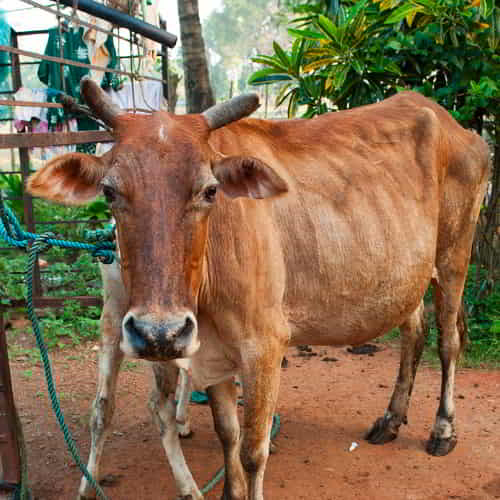
For example, when the cycle of poverty has been churning through a family for generations, it often takes an outside force to intervene in a tangible way to break through and help end the cycle. This outside force may be as simple as gifting a small flock of chickens or a pair of goats that the family can breed. Or maybe it is a new pull-cart for a farmer or a package of seeds for his or her garden.
The World Bank estimates that approximately 700 million people globally live in extreme poverty—surviving on less than $2.15 per day. Most of these individuals reside in countries within the 10/40 Window, particularly across Sub-Saharan Africa and South Asia. Families often face compounding challenges. Lack of clean water, inadequate healthcare, and limited educational opportunities trap generations in cycles that seem impossible to break without outside help.
Economic hardship frequently intersects with spiritual darkness in these regions. When people struggle daily just to survive, they may feel abandoned by the divine or believe that suffering is simply their fate. This is where practical expressions of God’s love can open hearts. A goat that provides milk demonstrates care in a tangible way. Seeds that yield a harvest show someone noticed their need. These gifts don’t replace the Gospel, but they create space for trust to develop.
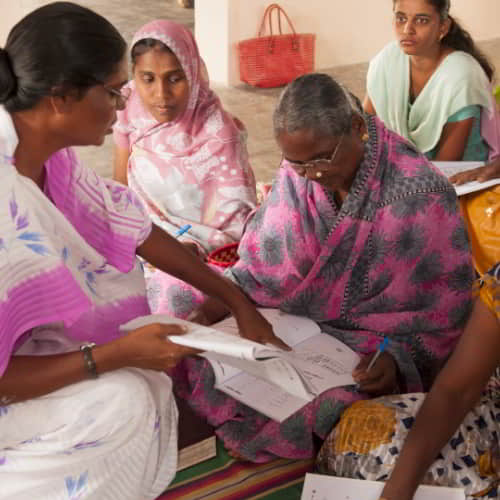
Classes are also highly impactful both for children and adults. Adults who learn income-generating skills are able to find new ways to provide for their families and likely to break out of poverty. The classes teach skills such as literacy, welding or sewing. Women especially benefit from adult literacy programs, gaining dignity and confidence as they learn to read. This empowerment ripples through families and communities. Children also find help through child sponsorship, which allows them to stay in school and receive the life-changing gift of education! Through all these ways, people in this region of the world find spiritual hope and tangible help through the missionaries of GFA World.
Open Doors research shows that violence against Christians has increased in several 10/40 Window regions, particularly across Sub-Saharan Africa and Central Asia. In some areas, local believers face attacks on their churches, restrictions on worship, or social ostracism from their communities. Despite these pressures, many continue to gather and encourage one another in their faith. They demonstrate remarkable courage, choosing to follow Jesus even when it costs them dearly.
The Role of National Workers
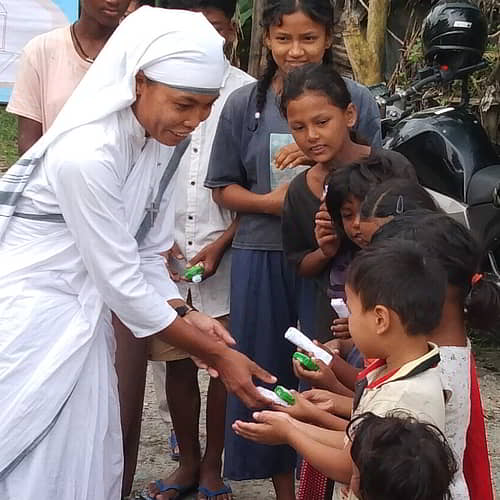
GFA missionaries are national workers who know their communities and culture. They don’t need to learn the language or study the intricacies of the area. They are intimately familiar with the region and the customs already. They were born in these contexts, speak the languages fluently, and understand cultural nuances that outsiders might miss. This insider perspective proves invaluable.
They know which approaches will connect and which might offend. They recognize when someone is genuinely interested versus simply being polite. These simple, humble servants of God minister to people’s physical and spiritual needs. They are the hands and feet of Jesus in many areas of the 10/40 window.
National missionaries also tend to work more sustainably and cost-effectively than expatriate workers. Living expenses align with local economies, meaning donated funds stretch further. Additionally, they don’t require visas or work permits that might be denied to foreigners. In countries hostile to outside Christian workers, local believers can often minister more freely—though still with caution—than international missionaries could.
Their familiarity with local religions helps them engage respectfully with those from other faiths. Rather than approaching neighbors as enemies, they build relationships rooted in genuine care. They listen to concerns, celebrate joys, and mourn losses alongside their communities. This relational foundation creates opportunities for authentic conversations about faith when the time is right.
A Call to Partnership
Will you join us in supporting our work in this critical area of the world?
Every person who prays, gives, or goes makes a difference in reaching those who have never heard. Prayer sustains workers facing discouragement or danger. Financial partnership provides resources for training, travel, and practical ministry tools. Going—whether short-term or long-term—brings fresh energy and demonstrates global unity in the body of Christ. The need remains urgent, but God continues to work powerfully even in the most challenging environments.
Believers around the world can participate in this mission. Some will feel called to learn languages and relocate to serve cross-culturally. Others will support those efforts through intercession and generosity from their home countries. All contributions matter—whether large or small, whether visible or hidden. God sees every sacrifice made for His kingdom and multiplies it according to His purposes.
The light shines in the darkness, and the darkness has not overcome it. This promise from Scripture holds true across every nation in the 10/40 Window. Though challenges appear overwhelming, God’s power proves greater still. Stories emerge regularly of individuals and families discovering new life in Jesus despite opposition. These testimonies encourage all who labor in this harvest field, reminding them that their work is not in vain.
Learn more about what is the 10/40 window[1] “The 10/40 Window.” Windows International Network. Accessed June 23, 2023. https://www.win1040.org/about-the-1040-window.
[2] Ibid.
[3] “Go therefore and make disciples of all the nations, baptizing them in the name of the Father and of the Son and of the Holy Spirit, teaching them to observe all things that I have commanded you; and lo, I am with you always, even to the end of the age.” Matthew 28:19-20 (NKJV).