Understanding the 10/40 Window Map
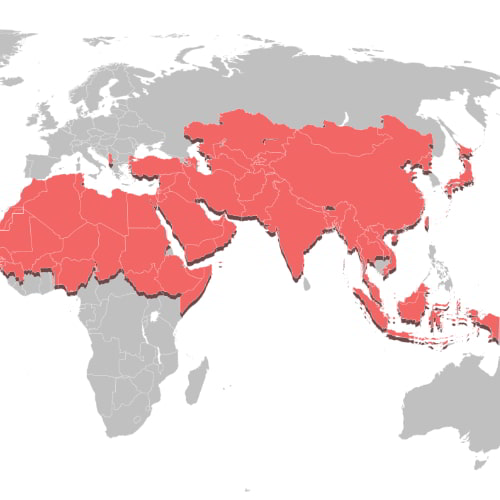
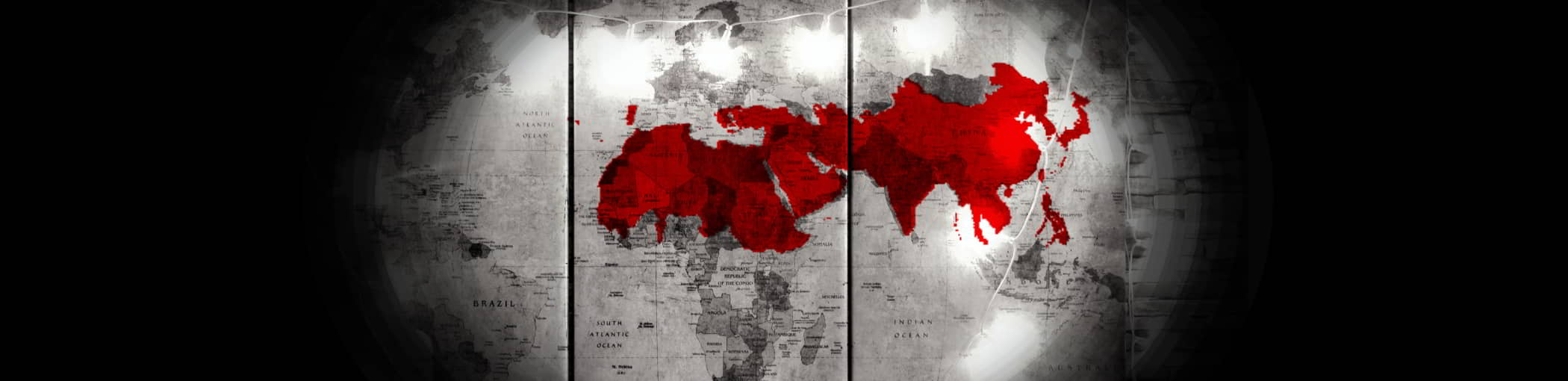
The 10/40 window map is a visual way of seeing where the most people live who do not ascribe to the Christian faith. The ’10’ and ’40’ refer to 10 degrees and 40 degrees north latitude on the earth’s globe, from Morocco to Japan. This rectangular area stretches across North Africa, the Middle East, and Asia, forming what researchers describe as a geographic band of opportunity.
The original map of 10/40 window countries only included countries with at least 50% of their land mass within those latitudinal degrees. A revised 10/40 window map now includes countries that are close to this geographic area with significant populations who are also inaccessible.[1]
When you look at how the 10/40 window is represented on a world map, the rectangular area becomes clear. Window International Network notes that this region includes 69 nations spanning Northern, Eastern, and Western Africa, the Middle East, the Arabian Peninsula, Southeast Europe, and Central, South, and Southeast Asia. The rectangular shape makes it easy for people to visualize where prayer and service are needed most.
The 10/40 window countries include many different religious groups, including Islam and traditional Asian religions. Additionally, this area holds more than 5 billion people, comprised of 8,882 different people groups.
According to Pray 10/40, the 2022 population of the 10/40 window was 5.3 billion people, representing roughly two-thirds of the world’s population. This means the majority of the world population lives in this defined geographic area.
It is a significant area of the world for its historical importance and population density. If drawn on a physical map, it looks like one large rectangle encompassing more than 60 countries.[2]
The region spans from countries in the 10/40 window across three continents. His Feet International reports that Africa, the Middle East, and Asia are all represented within these boundaries. Notable nations include Egypt, Saudi Arabia, Iran, Iraq, India, Pakistan, China, Indonesia, and many others spread across South Asia and beyond. The area includes North Africa, where Morocco, Algeria, Tunisia, Libya, and Egypt are located.
It extends through the Middle East, encompassing the Arabian Peninsula. South Asia, Central Asia, East Asia, and Southeast Asia all fall within this window. Even South Korea, despite having a significant Christian population, is included due to its latitude position, according to Wikipedia.
The term ’10/40 window’ was first used by missionary researcher Luis Bush in 1990 as Christians looked to have the largest impact possible through missions.[3] Luis Bush, who served as CEO of Partners International, coined the term to describe the geographic window of opportunity.
His wife Doris suggested calling it a “window” rather than the original “10/40 box,” according to Advancing Native Missions, because a window represents an opportunity to see important realities more clearly. Before being called the 10/40 window, Western missionaries referred to parts of this region as the “resistant belt.”
Wikipedia notes that Luis Bush presented this concept at the 1989 Lausanne II Conference in Manila. His research highlighted both the spiritual need and the opportunity for ministry in this vast region. Historically, those in the 10/40 window have had very little interaction with Christians or the Bible. They may have never heard of Jesus of Nazareth.[4]
The 10/40 window is home to 83% of the world’s remaining unreached people groups, Pray 10/40 reports. Furthermore, over 90% of the world’s remaining frontier people groups live in the 10/40 window. These unreached people groups face significant barriers to hearing about God’s love and grace.
In addition to the Muslim and traditional Asian religions, there are also millions of people in this area who are atheist, meaning they follow no religion at all. The 10/40 window contains the birthplace and headquarters of major world religions, including Islam, Buddhism, Hinduism, and Sikhism.
YWAM Nuremberg notes that Indonesia and Pakistan have some of the largest Muslim populations, while India and Thailand are predominantly Hindu and Buddhist respectively. The western part of the window, particularly across Africa, the Middle East, and the Arabian Peninsula, is predominantly Muslim.
South Asia in the middle section has significant Hindu populations. The eastern part, including much of Southeast Asia and East Asia, shows strong Buddhist influence. China, though officially atheist, has deep Buddhist roots that still influence the culture. This also makes it a primary place for Christians to extend the Great Commission that Jesus gave before he left earth.
Access to the gospel remains extremely limited for billions in this region. People living in many countries in the 10/40 window could not find out about Jesus even if they wanted to. Language barriers, governmental restrictions, and cultural challenges all contribute to this reality. His Feet International reports that many of the 10/40 window’s languages do not have access to the Bible in their native tongue.
This creates a significant barrier to understanding the good news. Furthermore, some governments actively oppose Christian work within their borders. Social and cultural factors also make sharing faith challenging in many communities.
The Significance of the 10/40 Window
Understanding why this region matters helps us pray more effectively. Joshua Project notes that approximately 5.44 billion individuals live in the revised 10/40 window, residing in 8,580 distinct people groups. These are not just statistics but real people created in God’s image. Each person has inherent worth and dignity. Each one deserves the opportunity to hear about God’s love.
The concentration of people without access to the gospel in this region is staggering. YWAM Nuremberg reports that only 3.4% of missionaries worldwide serve within the 10/40 window. This means 3.4% of missionaries work among 97% of the world’s unreached people. The disparity highlights a significant need for prayer, workers, and resources. Many large cities in this region remain densely populated yet spiritually underserved.
This is why it’s so important Christians take time for 10/40 window prayer. Prayer can feel like you are doing nothing, but it is, in fact, one of the most powerful tools that God has given his Church. Scripture teaches us that the fervent prayer of a righteous person accomplishes much. When we pray for the 10/40 window, we partner with God’s work in this region.
GFA World’s dedication to prayer has its roots in history, originating over three decades ago when a small gathering of a faithful group of believers who began to meet regularly on Tuesday evenings in K.P. and Gisela Yohannan’s living room.[5]
Prayer connects believers around the world with those who need to know God’s love. Through prayer, we can intercede for those without access to the good news of Jesus Christ. God hears and answers prayers for these precious souls. Our prayers can help open doors that seem closed. They can soften hearts that seem hardened. They can bring hope to situations that feel hopeless.
This large area is also home to some of the poorest people groups in the world. This means that one of the 10/40 window prayer points should be for the poor of these regions. Poverty and spiritual need often go hand in hand. When people lack basic necessities, they face daily struggles that can feel overwhelming.
Window International Network reports that 87% of the poorest people globally live in the 10/40 window, surviving on an average of just $250 per family annually. This extreme poverty creates vulnerabilities that affect every aspect of life.
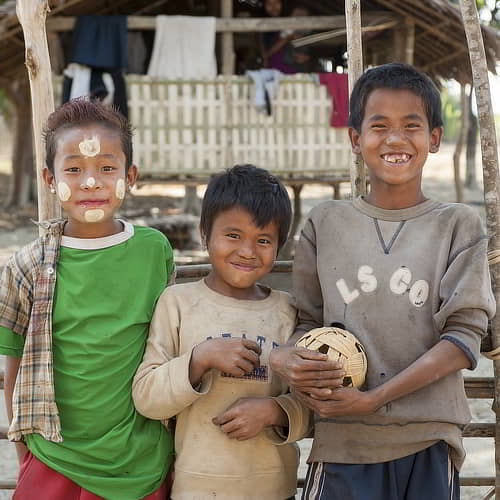
GFA longs to pray for and to serve the immediate needs of as many people as we can reach. One of the greatest needs is for the vulnerable children in these areas. GFA’s monthly prayer focus often includes children and families. To think of children going to bed hungry and in need of so much is devastating, but we can pray.
Children across South Asia and Africa face unique challenges. Window International Network emphasizes that eight out of ten of the poorest people in the world live within the 10/40 window. Families often survive on just a few hundred dollars per year. In this context, showing God’s love through practical help opens hearts to hope.
Children need nutritious food, clean water, education, and healthcare. These basic needs, when met, can transform a child’s future. GFA’s child sponsorship program addresses these needs while demonstrating God’s compassion. By caring for children, GFA workers build trust with families and entire communities.
GFA national missionaries rely on prayer, too, as they try to bring hope and help to children. National missionaries understand the local culture and speak the languages of the communities they serve. This enables them to build trust and share the love of Christ in meaningful ways. Advancing Native Missions emphasizes that national workers can access communities where foreign missionaries might face restrictions or barriers. They navigate cultural nuances with sensitivity and wisdom.
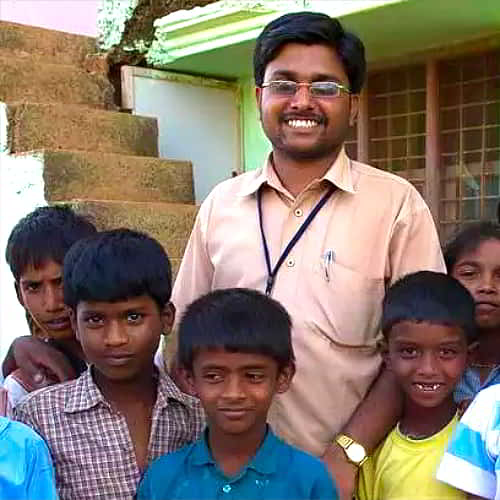
Their presence in communities often spans years or even decades, allowing deep, lasting relationships to form. Through the child sponsorship program, Sumit, a GFA national worker, got to know a little boy named Niral. Niral was withdrawn and shy, but Sumit felt great compassion for him and befriended him.[6]
Sumit nurtured and cared for Niral. Then Niral got sick and didn’t come to the program for a while. His mother came to inform Sumit of the boy’s condition, and the GFA Child Sponsor Program staff committed to praying for him. Sumit would visit Niral and pray for him by his side. Soon their prayers were answered, and Niral recovered. Through this trial, Niral and his family learned to pray, as well.
This story shows how Christian missionary workers serve with compassion and dedication. By meeting practical needs, they demonstrate God’s love in tangible ways. Prayer becomes a bridge between those who serve and those who are served.
The care and love provided by GFA workers through the child sponsorship program developed an important relationship with Niral and his family. The program not only helps with very practical things like meals and after-school tutoring, but it also forges stronger communities, with caring relationships where prayer can make a difference. These relationships are vital to helping communities that are gripped by poverty, lack of education and many other issues.
Building relationships takes time and genuine care. GFA workers invest in children and families because they believe every person matters to God. These connections transform not just individuals but entire communities.
You can join GFA’s prayer team today and watch God work in the lives of those living in the 10/40 window map.
You can also sponsor a child like Niral and know that the caring workers through GFA will pray for them as you do. Sponsorship creates a powerful three-way partnership between sponsor, child, and GFA workers.
Think of it as a strong, three-fold cord: GFA, you and the sponsored child.
Your partnership makes a real difference. When you sponsor a child, you become part of their story. You can pray for them by name and trust God to work in their life. Monthly sponsorship provides consistent support that helps children thrive. It covers nutritious meals, educational assistance, healthcare, and spiritual nurture. These practical investments create opportunities for transformation.
“Pray about everything,” Philippians tells us.[7] We can pray for more GFA workers, for the people they serve each day, for opportunities to demonstrate God’s love within the 10/40 window and for how God is calling us to join them in their work. We can pray for open doors and receptive hearts.
A child sponsorship is one of the easiest and most effective ways to do this. It’s also very personal. You will be able to pray for your child by name, knowing that you are actively asking God for the best in their life.
Prayer changes things. It connects us with God’s heart for the lost and hurting. Through prayer, we participate in God’s work around the world, even from our own homes.
This window of countries needs our prayers and our practical support. Countries included in the revised 10/40 window represent diverse cultures, languages, and needs. Yet they share a common reality: limited access to the good news of Jesus Christ.
Each nation within this window has its own unique history and challenges. But all face similar barriers to hearing about God’s love. Partner with GFA today to join the myriad of ways these people are being reached and cared for. Prayer is active, and giving is good. Together, they can bring the miraculous.
God is at work in the 10/40 window. Through faithful prayer and generous giving, believers worldwide can support this vital work. Every prayer matters, and every gift helps bring hope to those who need it most. The needs are vast, but God’s resources are greater. When we participate in His work, we see lives transformed by His grace. We become part of the story God is writing across Africa, the Middle East, and Asia.
Learn more about the 10/40 window[1] “What Is the 10/40 Window?” Joshua Project. Accessed June 2023. https://joshuaproject.net/resources/articles/10_40_window.
[2] Ibid.
[3] “The 10/40 Window”. Time. June 30, 2003. Archived from the original on April 28, 2007. https://web.archive.org/web/20070428234833/http:/www.time.com/time/covers/1101030630/map/.
[4] “What Is the 10/40 Window?” Joshua Project. Accessed June 2023. https://joshuaproject.net/resources/articles/10_40_window.
[5] “Join the Prayer Team.” GFA World. Accessed June 2023. https://www.gfa.org/pray/.
[6] “Special Love for a Withdrawn Child.” GFA World. August 29, 2016. https://gospelforasia-reports.org/2016/08/special-love-withdrawn-child/.
[7] Philippians 4:6